



Publications
Publications
Filter by
LOGISTICS 4.0, INNOVATION & INTELLECTUAL PROPERTY EVALUATION: THE MODERATING EFFECTS OF ITS ADOPTION
The purpose of this paper is to study and analyse the changes in logistics technologies concerning Industry 4.0. The paper discusses the effect logistics 4.0 innovations have on Intellectual Property (IP) management. Logistics 4.0 has marked a new era and introduced a novel concept to both industry and service communities. New entrepreneurial ideas based on different technologies are introduced

SDDM: an interpretable statistical concept drift detection method for data streams
Machine learning models assume that data is drawn from a stationary distribution. However, in practice, challenges are imposed on models that need to make sense of fast-evolving data streams, where the content of data is changing and evolving over time. This change between the distributions of training data seen so-far and the distribution of newly coming data is called concept drift. It is of
COVID-19 in North Africa: Comparative analysis by macroscopic growth laws
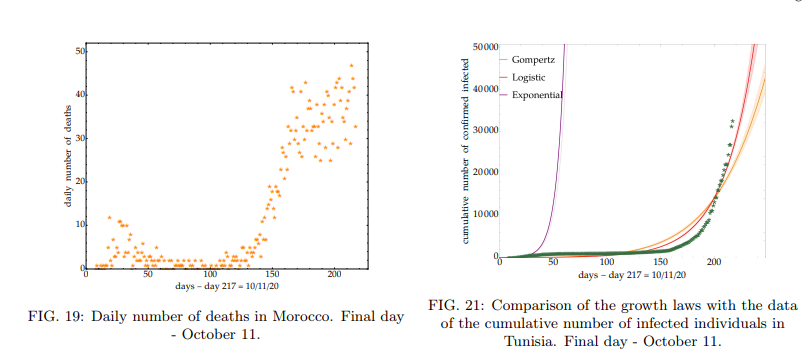
A comparative analysis of the COVID-19 diffusion in North African countries, Algeria, Egypt, Morocco and Tunisia has been carried out with the aim to study the effects of the containment efforts in different nations and the reliability of the predictions based on the data fits by macroscopic growth laws with a small number of free parameters. The comparison with data shows that the Coronavirus
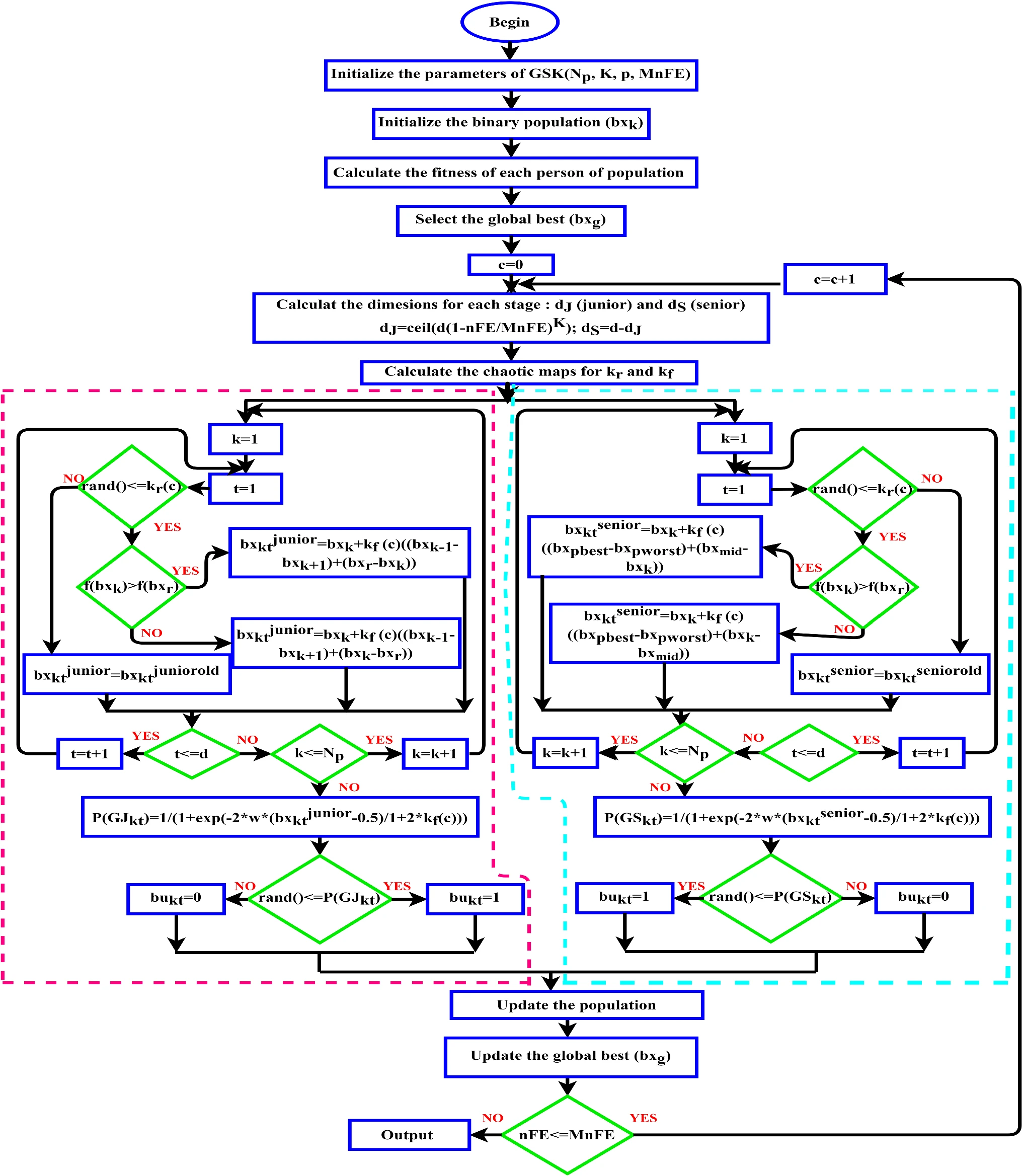
Chaotic gaining sharing knowledge-based optimization algorithm: an improved metaheuristic algorithm for feature selection
Two implementations of fractional-order relaxation oscillators
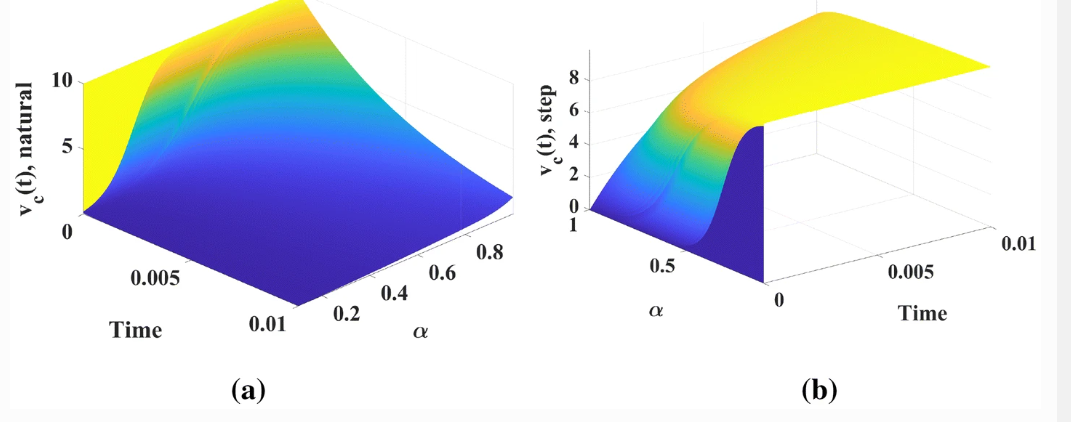
This work proposes general formulas for designing two different topologies of fractional-order relaxation oscillators. One topology contains an Operational Amplifier and the other one relies on an Operational Trans-Resistance Amplifier. The design procedure hinges on the general fractional-order natural and step responses of RC, which is proved in this work depending on Mittag Leffler function
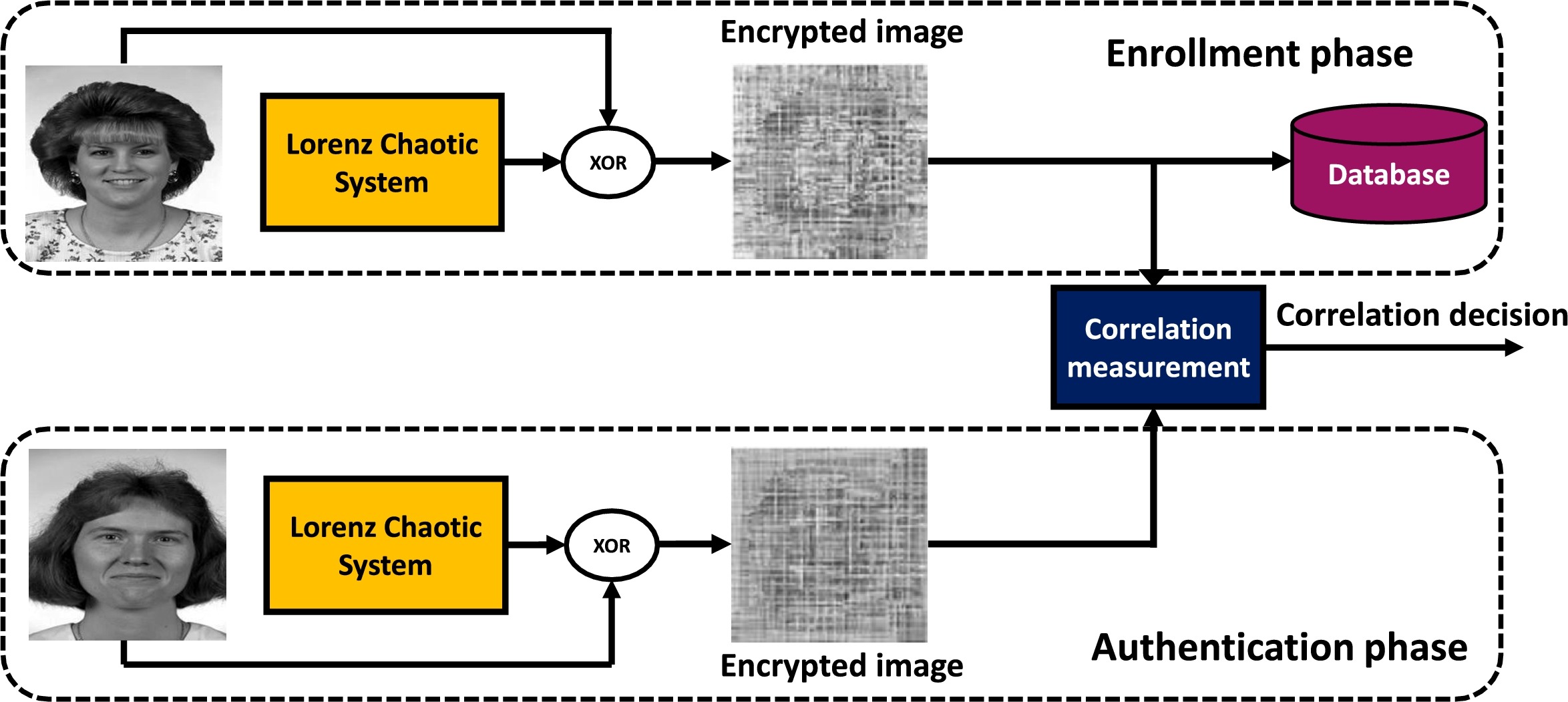
Cancellable face recognition based on fractional-order Lorenz chaotic system and Haar wavelet fusion
Cancellable biometrics is the art of generating distorted or encrypted templates of original biometric templates. The evolution of cancellable biometrics is attributed to the advanced hacking technologies that can capture the original stored biometrics from databases. One of the solutions for this problem is to store cancellable biometric templates in the database rather than the original ones
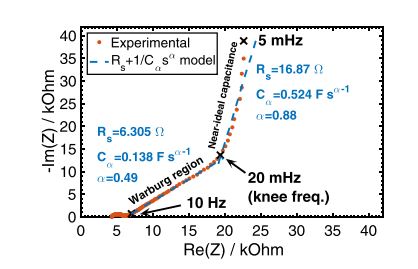
Possibility of information encoding/decoding using the memory effect in fractional-order capacitive devices
In this study, we show that the discharge voltage pattern of a supercapacitor exhibiting fractional-order behavior from the same initial steady-state voltage into a constant resistor is dependent on the past charging voltage profile. The charging voltage was designed to follow a power-law function, i.e. [Formula: see text], in which [Formula: see text] (charging time duration between zero voltage
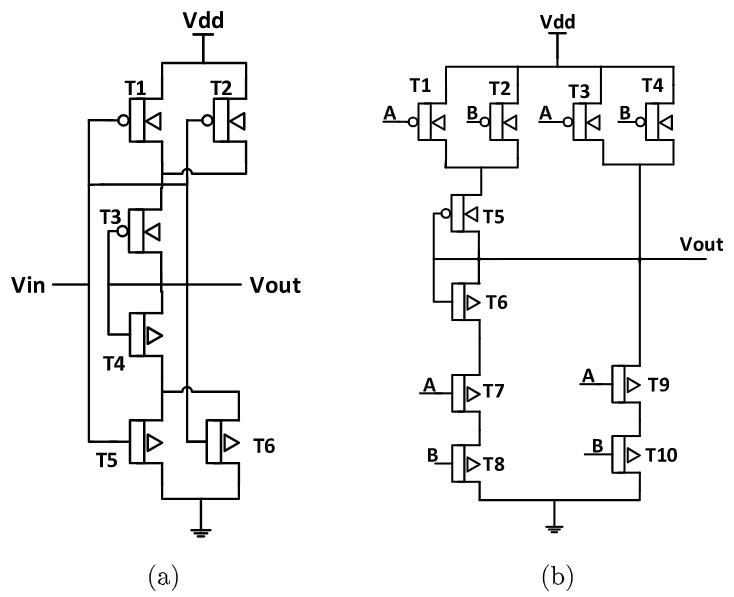
CNTFET design of a multiple-port ternary register file
Ternary number system offers higher information processing within the same number of digits when compared to binary systems. Such advantage motivated the development of ternary processing units especially with CNTFET which offers better power and delay results compared to CMOS-based realization. In this paper, we propose a variety of circuit realizations for the ternary memory elements that are
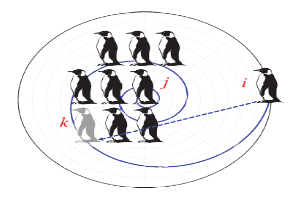
Discretization of emperor penguins colony algorithms with application to modular product design
Modularity concepts attracted the attention of many researchers as it plays an important role in product design problems. Modularity requires dividing a product into a set of modules that are independent between each other and dependent within. The product is represented using Design Structure Matrix (DSM). DSM works as a system representation tool; it visualizes the interrelationship between
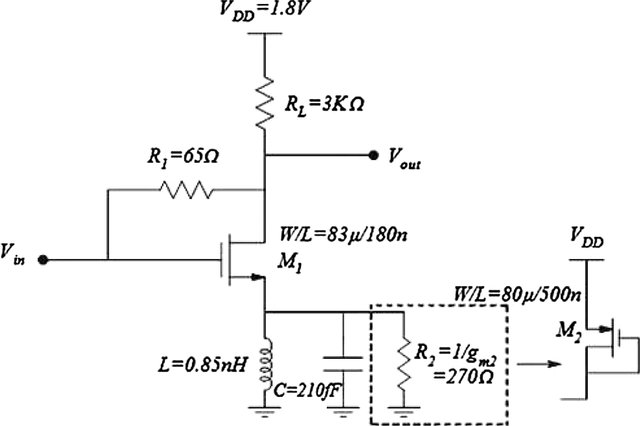
Ultra-low-power compact single-transistor all-pass filter with tunable delay capability
A novel first-order voltage-mode all-pass filter is introduced as a true-time delay (TTD) cell with tunable delay capability. The proposed filter consists of a single transistor, a varactor, and four resistors. The operation of the proposed filter is verified by post-layout simulations in 65-nm CMOS technology. The post-layout simulation results of a single stage of the proposed filter demonstrate