



Publications
Publications
Filter by
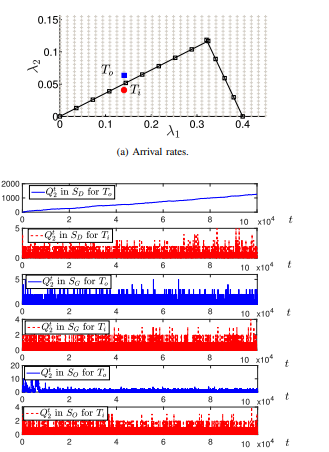
Stability Analysis of Slotted Aloha with Opportunistic RF Energy Harvesting
Energy harvesting (EH) is a promising technology for realizing energy-efficient wireless networks. In this paper, we utilize the ambient RF energy, particularly interference from neighboring transmissions, to replenish the batteries of the EH enabled nodes. However, RF energy harvesting imposes new challenges into the analysis of wireless networks. Our objective in this paper is to investigate the
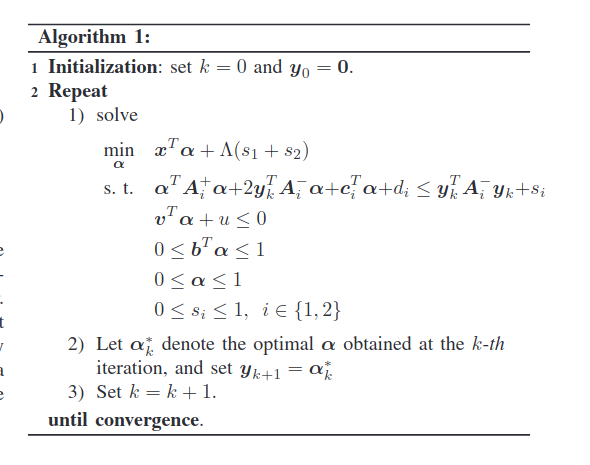
Novel cooperative policy for cognitive radio networks: Stability region and delay analysis
We consider a cognitive radio system that consists of primary user, secondary user, and their destinations. The secondary user has a relaying capability, i.e., it transmits the relayed packets from the primary user. Unlike most of the previous works that restrict the secondary user to transmit only in the idle time slots, we assume that the secondary user interferes on the primary user with
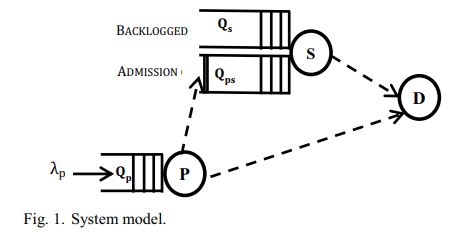
Cooperation and underlay mode selection in cognitive radio network
In this paper, we propose a technique for cooperation and underlay mode selection in cognitive radio networks. Hybrid spectrum sharing is assumed where the secondary user (SU) can access the primary user (PU) channel in two modes, underlay mode or cooperative mode with admission control. Overlay spectrum sharing allows the SU to occupy the spectrum only when the PU is idle. Cooperation
Band allocation for cognitive radios with buffered primary and secondary users
In this paper, we study band allocation of Ms buffered secondary users (SUs) to Mp orthogonal primary licensed bands, where each primary band is assigned to one primary user (PU). Each SU is assigned to one of the available primary bands with a certain probability designed to satisfy some specified quality of service (QoS) requirements for the SUs. In the proposed system, only one SU is assigned
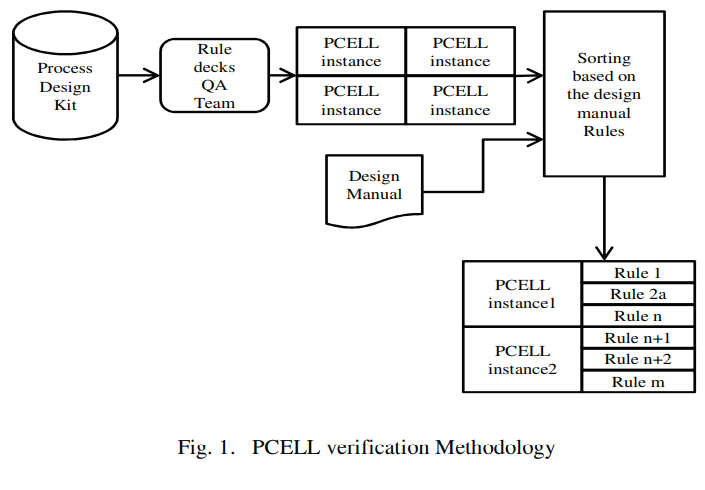
Parameterized test patterns methodology for layout design rule checking verification
Design rules verification is an essential stage in the Process Design Kit (PDK) release for any fab. Since achieving high yield is the target of any fab, the design rules should ensure this. Design rules violations happening after fabrication lead to disastrous results on the mask sets as well as increased cost and delayed schedules. Here comes the importance of verifying these design rules and
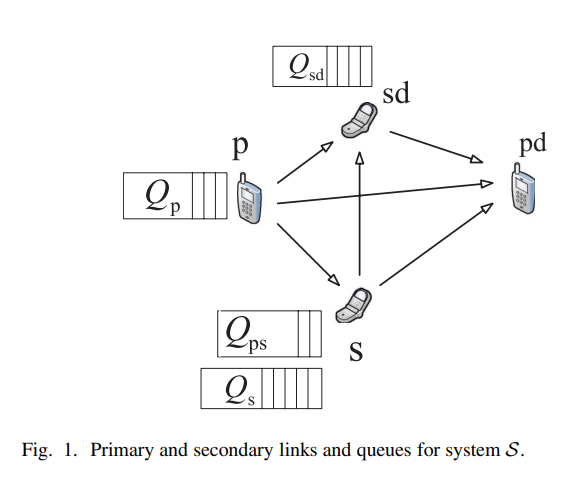
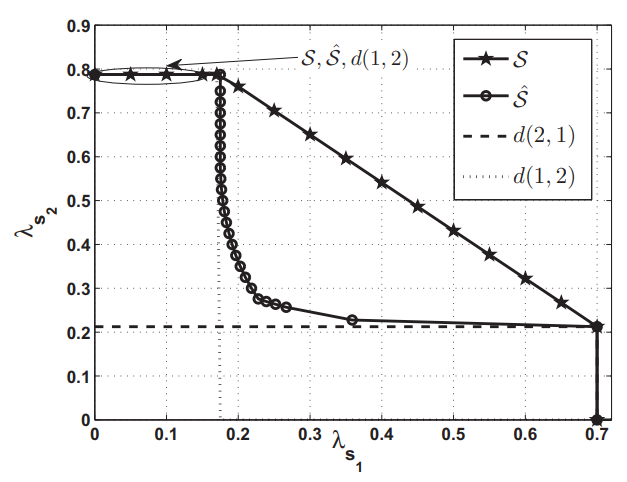
Maximum Secondary Stable Throughput of a Cooperative Secondary Transmitter-Receiver Pair: Protocol Design and Stability Analysis
In this paper, we investigate the impact of cooperation between a secondary transmitter-receiver pair and a primary transmitter on the maximum stable throughput of the primary-secondary network. Each transmitter, either primary or secondary, has a buffer for storing its own traffic. In addition to its own buffer, the secondary transmitter has a buffer for storing a fraction of the undelivered
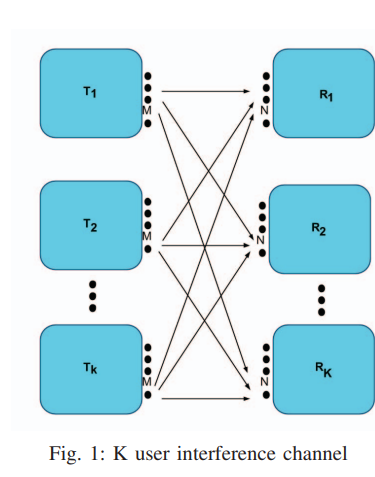
On the degrees of freedom region of the M × N Interference Channel
In this paper, the K-user MIMO interference channel is considered. The asymmetric DoF region for the channel is studied. The asymmetric DoF represent the set of all achievable DoF combinations {d1, d2,..., dK}. For the three user channel, two cases are presented, the first is when all transmitters and receivers have equal number of antennas M, the other is when each transmitter has M antennas
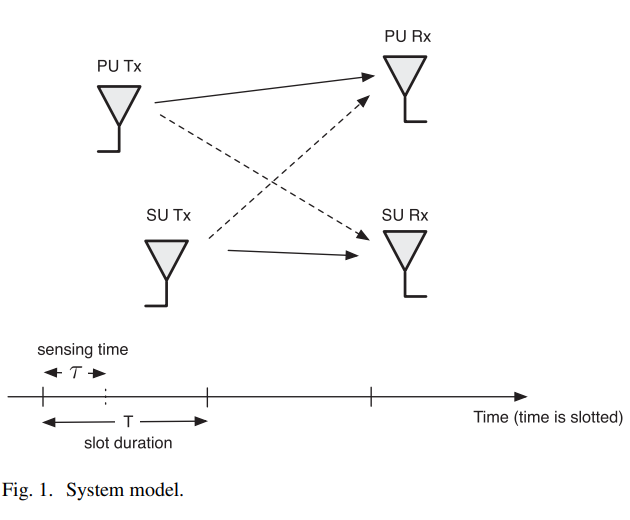
Effective capacity of delay-constrained cognitive radio links exploiting primary feedback
In this paper, we study the effective capacity (EC) of cognitive radio (CR) networks operating under statistical quality-of-service (QoS) constraints in an attempt to support real-time applications at the secondary users (SUs). In particular, we analyze the performance gains, in terms of EC and average transmitted power, attributed to leveraging the primary user (PU) feedback overheard at the SU
On optimal policies in full-duplex wireless powered communication networks
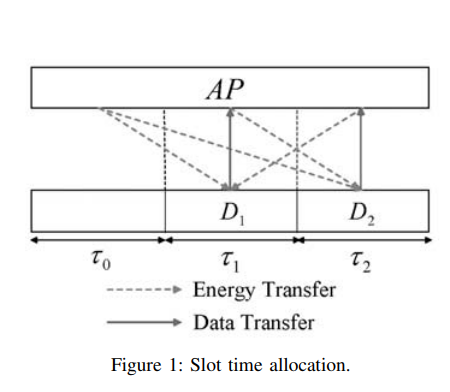
The optimal resource allocation scheme in a full-duplex Wireless Powered Communication Network (WPCN) composed of one Access Point (AP) and two wireless devices is analyzed and derived. AP operates in a full-duplex mode and is able to broadcast wireless energy signals in downlink and receive information data in uplink simultaneously. On the other hand, each wireless device is assumed to be
Reactance-less RM relaxation oscillator using exponential memristor model
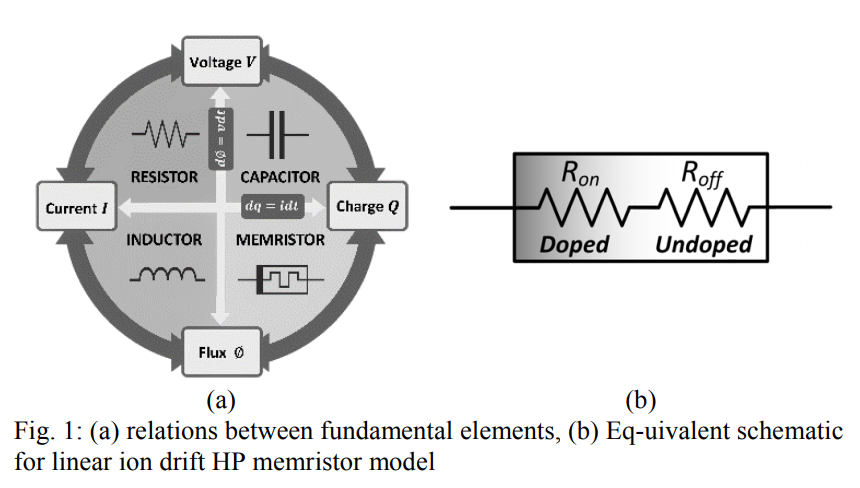
Recently, the memristor based relaxation oscillators become an important topic in circuit theory where the reactive elements are replaced by memristor which occupies a very small area. In this paper, a design of memristor-based relaxation oscillator is introduced based on exponential memristor model. Unlike previously published oscillators which were built based on a simple memristor model, the