Publications
Publications
Filter by
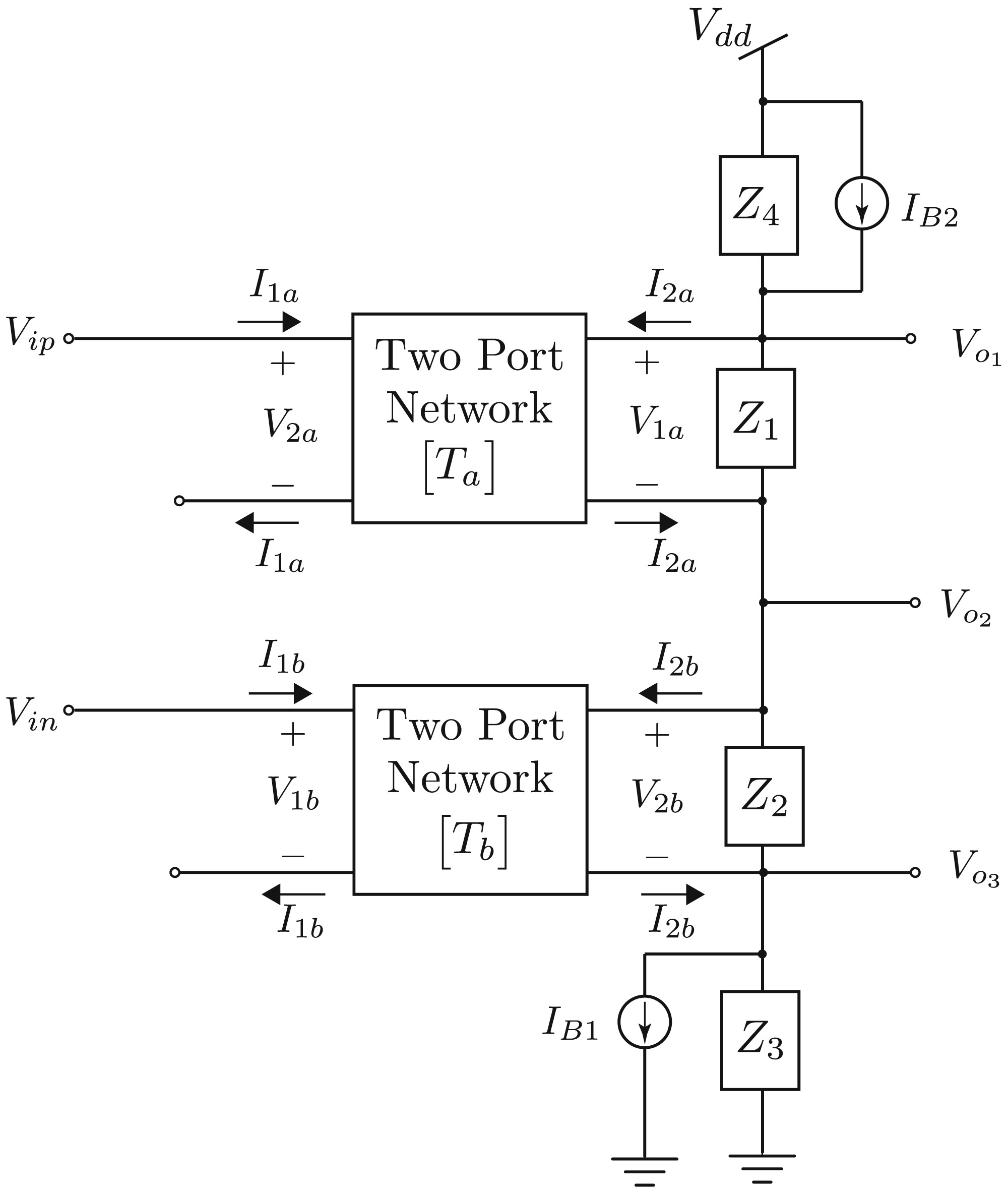
Minimal two-transistor multifunction filter design
This paper presents a comprehensive method and analysis on the design of two-transistor multi-output filters where three possible functions are simultaneously available. Although two transistors are employed at its core, proper biasing does not require additional passive components. A total of thirteen valid second-order filters are reported, and several of them are experimentally tested using
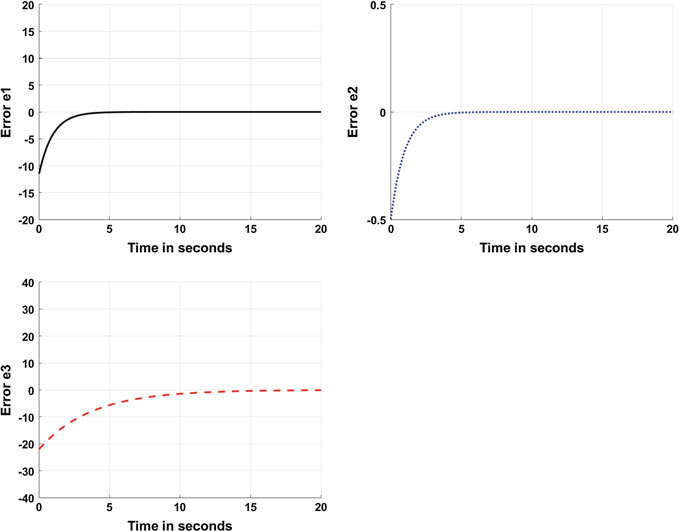
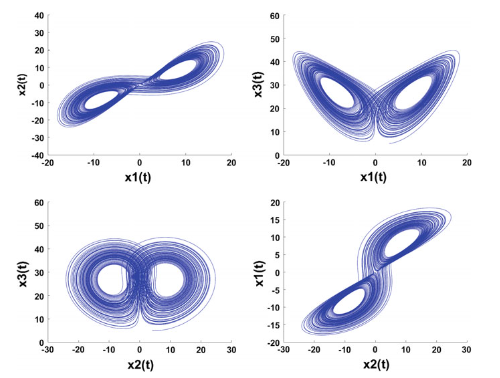
A new method to synchronize fractional chaotic systems with different dimensions
By using two scaling function matrices, the synchronization problem of different dimensional fractional order chaotic systems in different dimensions is developed in this chapter. The controller is designed to assure that the synchronization of two different dimensional fractional order chaotic systems is achieved using the Lyapunov direct method.Numerical examples and computer simulations are
A new method to synchronize fractional chaotic systems with different dimensions
By using two scaling function matrices, the synchronization problem of different dimensional fractional order chaotic systems in different dimensions is developed in this chapter. The controller is designed to assure that the synchronization of two different dimensional fractional order chaotic systems is achieved using the Lyapunov direct method.Numerical examples and computer simulations are
On new fractional inverse matrix projective synchronization schemes
In this study, the problem of inverse matrix projective synchronization (IMPS) between different dimensional fractional order chaotic systems is investigated. Based on fractional order Lyapunov approach and stability theory of fractional order linear systems, new complex schemes are proposed to achieve inverse matrix projective synchronization (IMPS) between n-dimension and m-dimension fractional
On new fractional inverse matrix projective synchronization schemes
In this study, the problem of inverse matrix projective synchronization (IMPS) between different dimensional fractional order chaotic systems is investigated. Based on fractional order Lyapunov approach and stability theory of fractional order linear systems, new complex schemes are proposed to achieve inverse matrix projective synchronization (IMPS) between n-dimension and m-dimension fractional
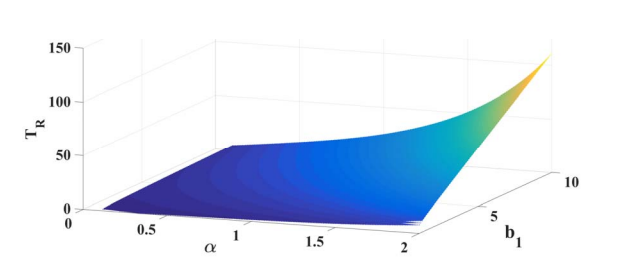
Elmore delay in the fractional order domain
Interconnect design has recently become one of the important factors that affect the circuit delay and performance especially in the deep submicron technology. The modelling of interconnects is typically based on using Elmore definitions of the delay time and rise time. So, a general formula for Elmore delay time and rise time in the fractional order domain are presented in this work. It is found
Modelling supercapacitors leakage behaviour using a fractional-order model
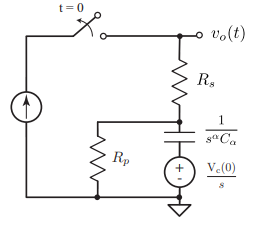
A fractional-order circuit model is explored to represent the leakage/self-discharge behaviour of commercially available supercapacitors. This fractional order-model is composed of two elements, a fractional-order capacitor with impedance Z = 1/CαSα and a parallel resistance Rp, which set the discharge based on the time constant τ = (RpC)1/α and order α. Self-discharging data was collected from a
CMOS realization of all-positive pinched hysteresis loops
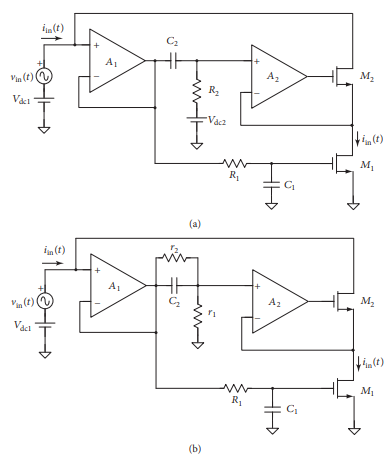
Two novel nonlinear circuits that exhibit an all-positive pinched hysteresis loop are proposed. These circuits employ two NMOS transistors, one of which operates in its triode region, in addition to two first-order filter sections. We show the equivalency to a charge-controlled resistance (memristance) in a decremental state via detailed analysis. Simulation and experimental results verify the
Fractional order control and synchronization of chaotic systems
[No abstract available]
Fractional order control and synchronization of chaotic systems
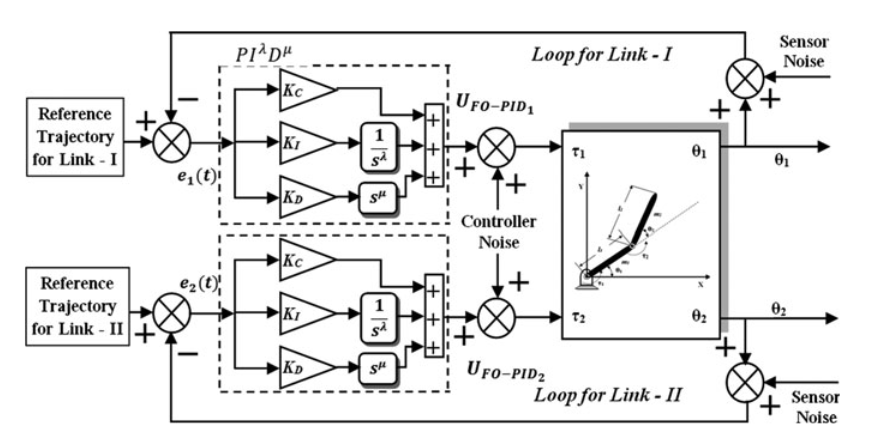
The book reports on the latest advances in and applications of fractional order control and synchronization of chaotic systems, explaining the concepts involved in a clear, matter-of-fact style. It consists of 30 original contributions written by eminent scientists and active researchers in the field that address theories, methods and applications in a number of research areas related to