



Publications
Publications
Filter by
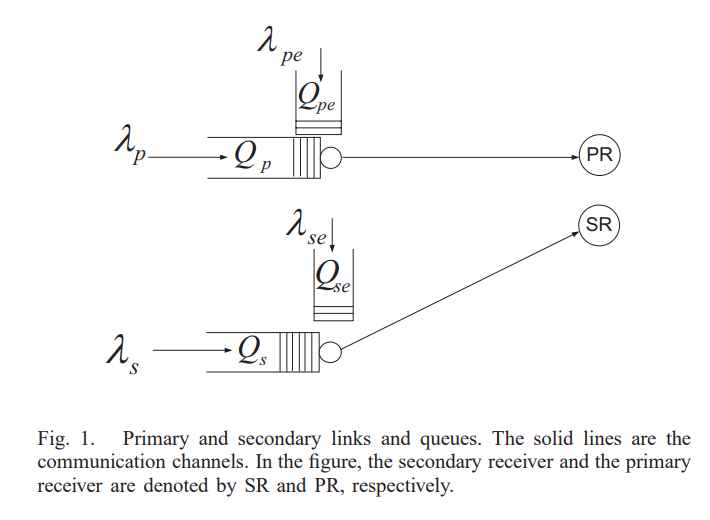
Optimal selection of spectrum sensing duration for an energy harvesting cognitive radio
In this paper, we consider a time-slotted cognitive radio (CR) setting with buffered and energy harvesting primary and CR users. At the beginning of each time slot, the CR user probabilistically chooses the spectrum sensing duration from a predefined set. If the primary user (PU) is sensed to be inactive, the CR user accesses the channel immediately. The CR user optimizes the sensing duration
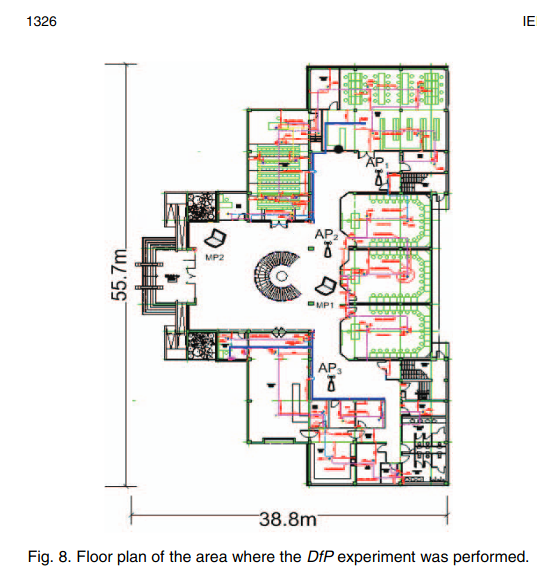
Nuzzer: A large-scale device-free passive localization system for wireless environments
The widespread usage of WLANs and mobile devices has fostered the interest in localization systems for wireless environments. The majority of research in the context of wireless-based localization systems has focused on device-based active localization, in which devices are attached to tracked entities. Recently, device-free passive localization (DfP) has been proposed where the tracked entity is
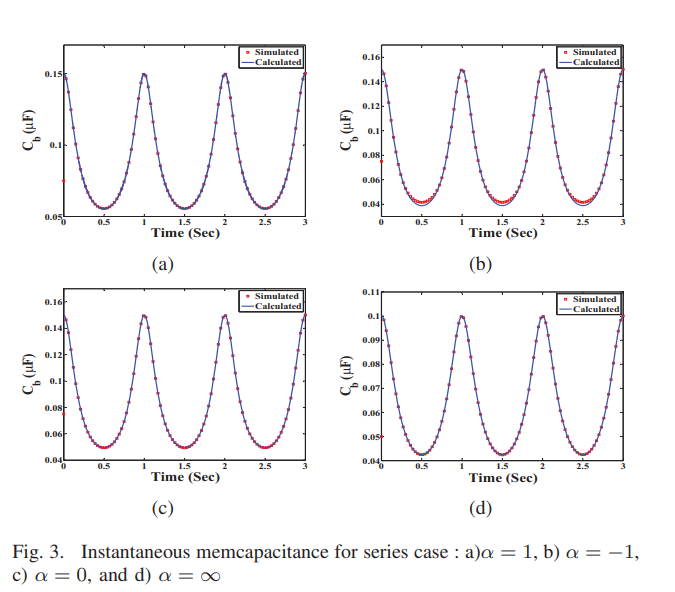
On the mathematical modeling of series and parallel memcapacitors
Recently, Memristive elements such as memristor, memcapacitor and meminductors have become very attractive components in many applications, due to its unique behavior which can not be obtained using the other conventional elements. This paper discusses the analytical analysis of two memcapacitors connected in series and in parallel taking the effect of mismatch in mobility factor and polarity of
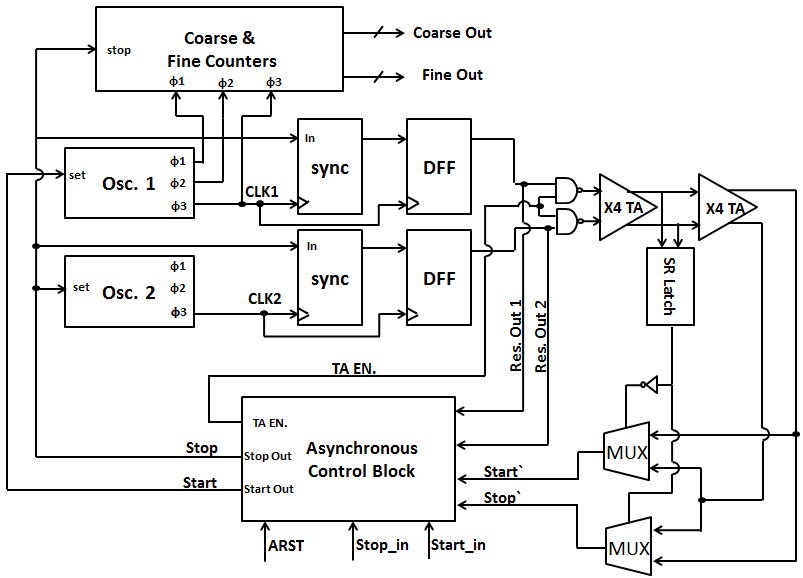
A novel 10-Bit high-throughput two-stage TDC with reduced power and improved linearity
This paper introduces a new architecture that improves the throughput of the two-stage Time to Digital Converter (TDC). An oscillator-based TDC is used for conversion. The time residue from the first stage is generated directly after the stop signal is asserted and saved in the form of phase-shift between two oscillating signals. Instead of using two stages, an asynchronous control block is
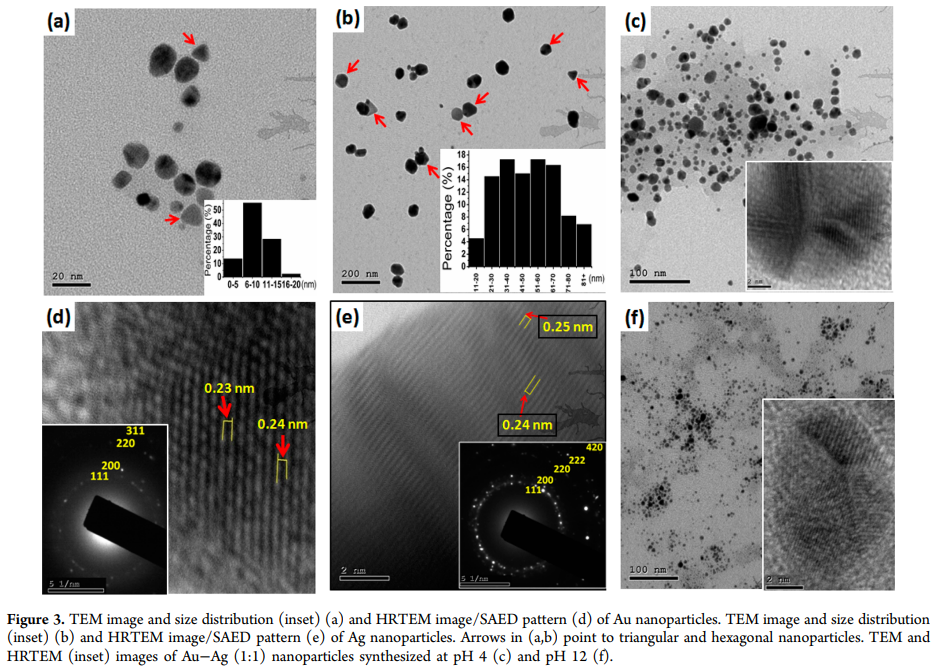
Phytosynthesis of Au, Ag, and Au-Ag bimetallic nanoparticles using aqueous extract of sago pondweed (Potamogeton pectinatus L.)
A green and facile method for the synthesis of Au, Ag, and Au-Ag bimetallic nanoparticles was developed using the aqueous extract of sago pondweed (Potamogeton pectinatus L.). Size, morphology, crystallinity, composition, capping layer, and stability of the synthesized nanoparticles were all investigated. The effect of the synthesis variables on the nanoparticles was also studied. Results showed
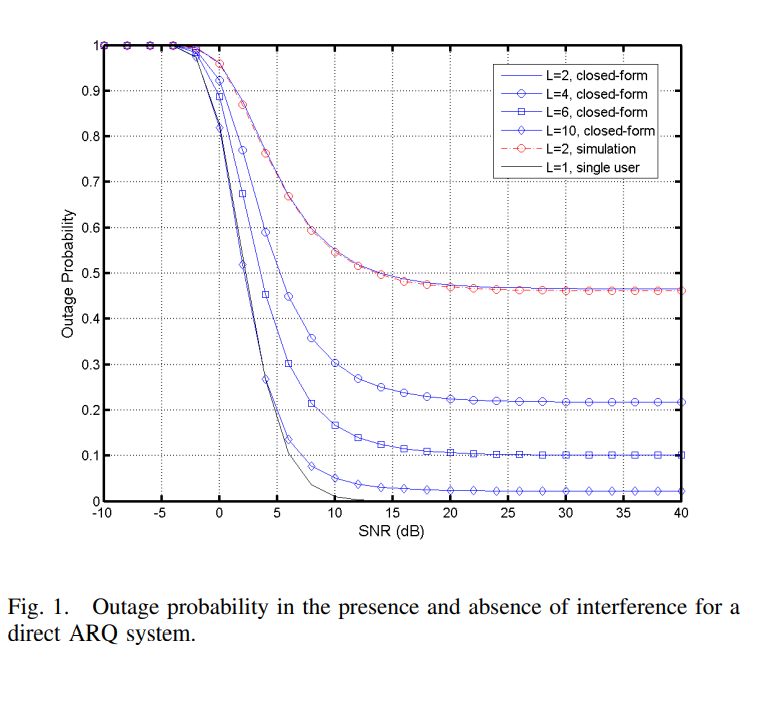
Optimal beamforming for MIMO shared relaying in downlink cellular networks with ARQ
In this paper, we study the performance of the downlink of a cellular network with automatic repeat-request (ARQ) and a half duplex decode-and-forward shared relay. In this system, two multiple-input-multiple-output (MIMO) base stations serve two single antenna users. A MIMO shared relay retransmits the lost packets to the target users. First, we study the system with direct retransmission from
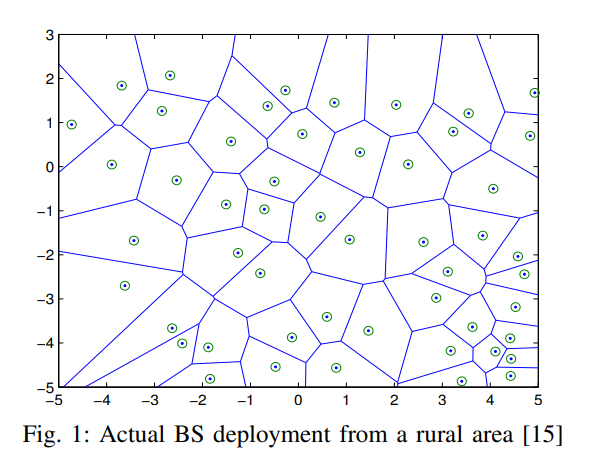
Coverage probability analysis for wireless networks using repulsive point processes
The recent witnessed evolution of cellular networks from a carefully planned deployment to more irregular, heterogeneous deployments of Macro, Pico and Femto-BSs motivates new analysis and design approaches. In this paper, we analyze the coverage probability in cellular networks assuming repulsive point processes for the base station deployment. In particular, we characterize, analytically using
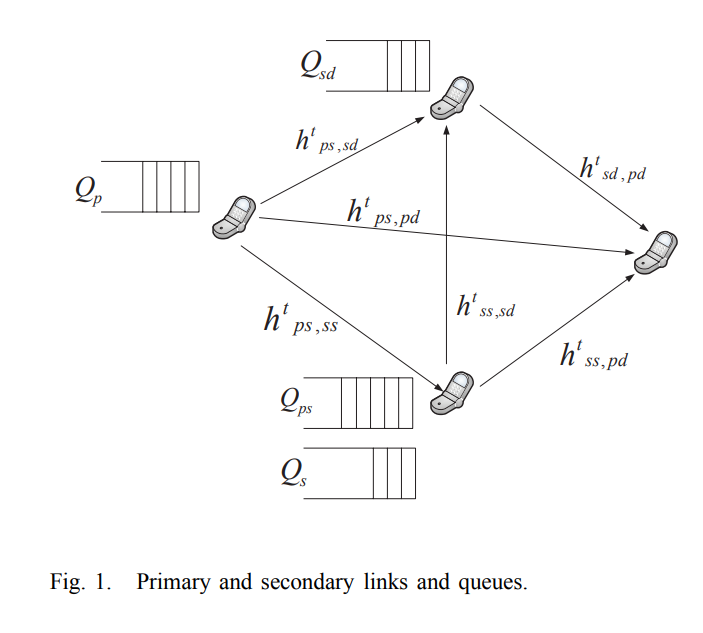
Transmit and receive cooperative cognition: Protocol design and stability analysis
In this paper, we investigate the stability of a cooperative cognitive system. We propose a cooperative secondary transmitter-receiver system (CSTR), where, the secondary transmitter (ST) and the secondary receiver (SR) increase the spectrum availability for the ST packets by relaying the unsuccessfully transmitted packets of the primary transmitter (PT). We assume receiving nodes with multipacket
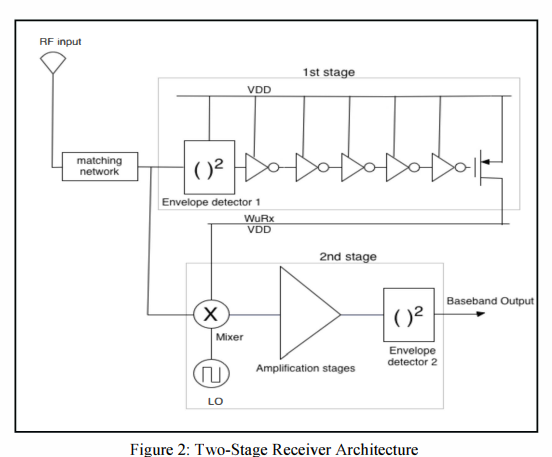
A 2.5 μwatts two stage wake-up receiver for Wireless Sensor Networks
An ultra low power wake-up receiver for Wireless Sensor Network (WSN) applications is presented. The proposed wake-up receiver is composed of two stages. The first stage is a low-power low-sensitivity stage that acts as a 'sentinel' and continuously monitors the channel, while the second stage is a conventional low-power wake-up receiver. The 2.44GHz two-stage receiver has a sensitivity of -72dBm
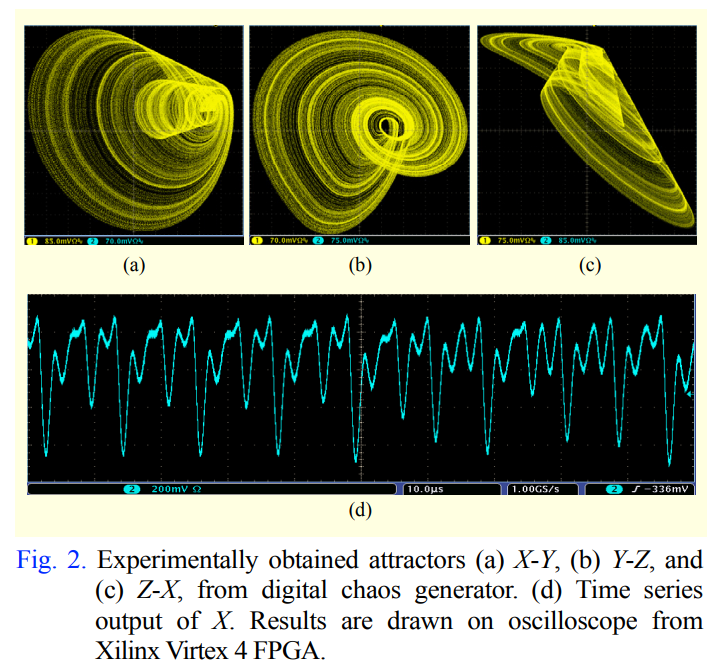
Generalized hardware post-processing technique for chaos-based pseudorandom number generators
This paper presents a generalized post-processing technique for enhancing the pseudorandomness of digital chaotic oscillators through a nonlinear XOR-based operation with rotation and feedback. The technique allows full utilization of the chaotic output as pseudorandom number generators and improves throughput without a significant area penalty. Digital design of a third-order chaotic system with