



Publications
Publications
Filter by
Impact of alignment algorithms on 16S metagenomics analysis
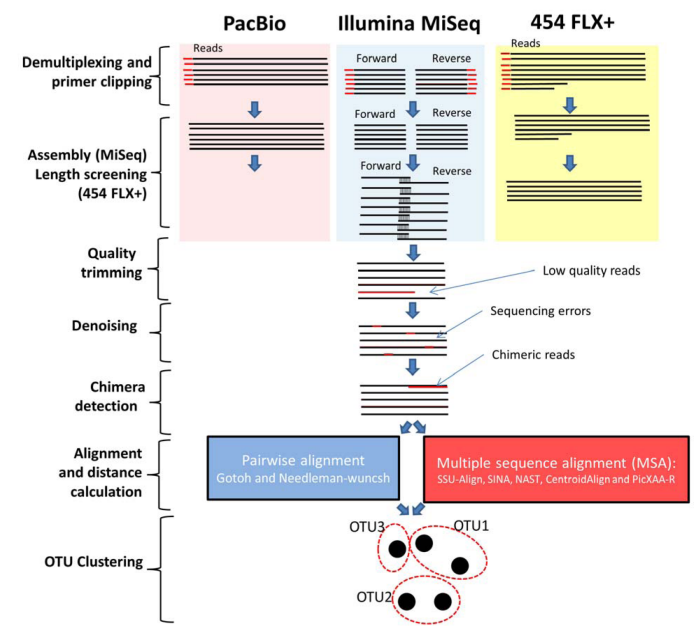
The development of high-throughput sequencing technologies has provided microbial ecologists with an efficient approach to assess bacterial diversity at an unseen depth. In the last year, various platforms have been used for such analysis particularly the Illumina MiSeq, 454 pyrosequencing GS FLX+ and PacBio sequencing platforms. However, analysing such high-throughput data is posing important
Guest Editorial: Fractional-Order Circuits and Systems: Theory, Design, and Applications
[No abstract available]

Voltage-controlled M-M relaxation Oscillator
This paper discusses voltage-controlled M-M relaxation oscillator with analytical and circuit simulations. The introduced circuit has two different configurations based on the polarities of memristor; whether they are in the same direction or in the opposite direction. The Analytical formulas are function of the reference voltage such as the oscillation frequency and oscillation conditions for

Bilingual Embeddings andWord Alignments for Translation Quality Estimation
This paper describes our submission UFAL MULTIVEC to the WMT16 Quality Estimation Shared Task, for English- German sentence-level post-editing effort prediction and ranking. Our approach exploits the power of bilingual distributed representations, word alignments and also manual post-edits to boost the performance of the baseline QuEst++ set of features. Our model outperforms the baseline, as well
A computational flow model of oxygen transport in the retinal network
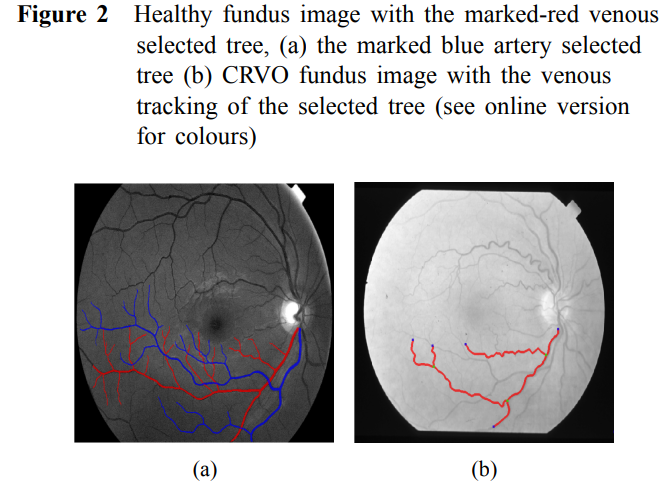
The retina's high oxygen demands and the retinal vasculature's relatively sparse nature are assumed to contribute to the retina's specific vulnerability to vascular diseases. This study has been designed to model the oxygen transport in physiologically realistic retinal networks. A computational fluid dynamics study has been conducted to investigate the effect of topological changes on the oxygen
Fractional canny edge detection for biomedical applications
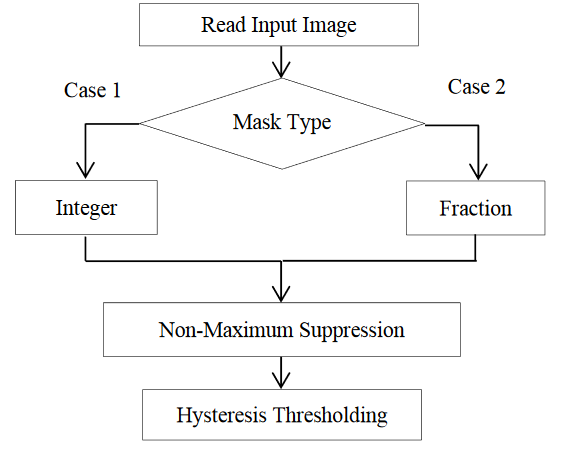
This paper presents a comparative study of edge detection algorithms based on integer and fractional order differentiation. A performance comparison of the two algorithms has been proposed. Then, a soft computing technique has been applied to both algorithms for better edge detection. From the simulations, it shows that better performance is obtained compared to the classical approach. The noise
Multi-reader RFID tag identification using bit tracking (MRTI-BT)
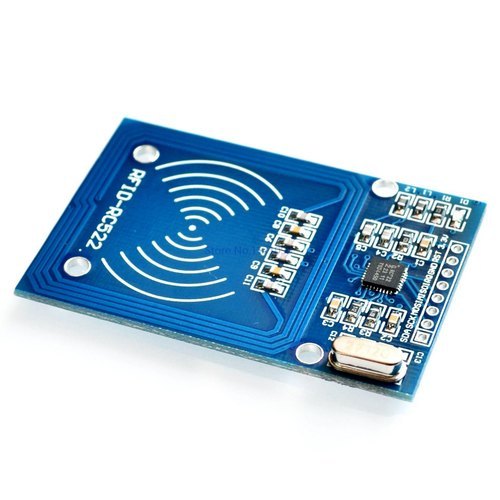
In this paper we study the problem of tag identification in multi-reader RFID systems. In particular, we propose a novel solution to the reader-to-reader collisions and tag collisions in multi-reader systems, using the concept of bit tracking [1]. Towards this objective, we propose the multi-reader RFID tag identification using bit tracking (MRTI-BT) algorithm which allows concurrent tag
Hermite polynomials in the fractional order domain suitable for special filters design
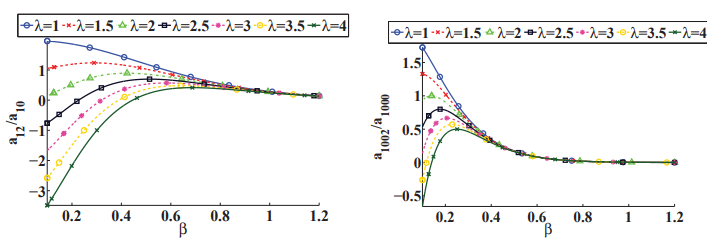
Due to the importance of its integer order counterpart in many mathematical and engineering fields, the fractional order Hermite polynomials are studied in this paper. A fractional variation of the well known Hermite differential equation is introduced based on Caputo fractional operator. The proposed equation is solved using fractional Taylor power series method and the convergence is verified
Memristor-based pulse width modulator circuit
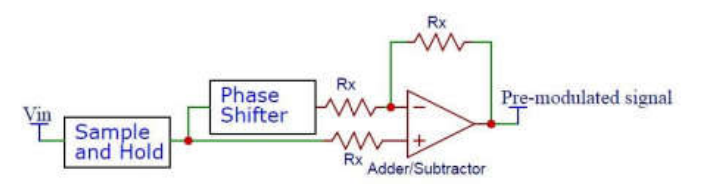
This paper discusses the use of the memristor in one of the most important modulation techniques in communication field namely the pulse-width modulation. A fundamental two designs for memristor-based lead and trail PWM are discussed with mathematical analysis and PSPICE simulation results which show a great matching with the analytical formulation. Moreover, a third design which combine those two
Symmetric encryption algorithms using chaotic and non-chaotic generators: A review
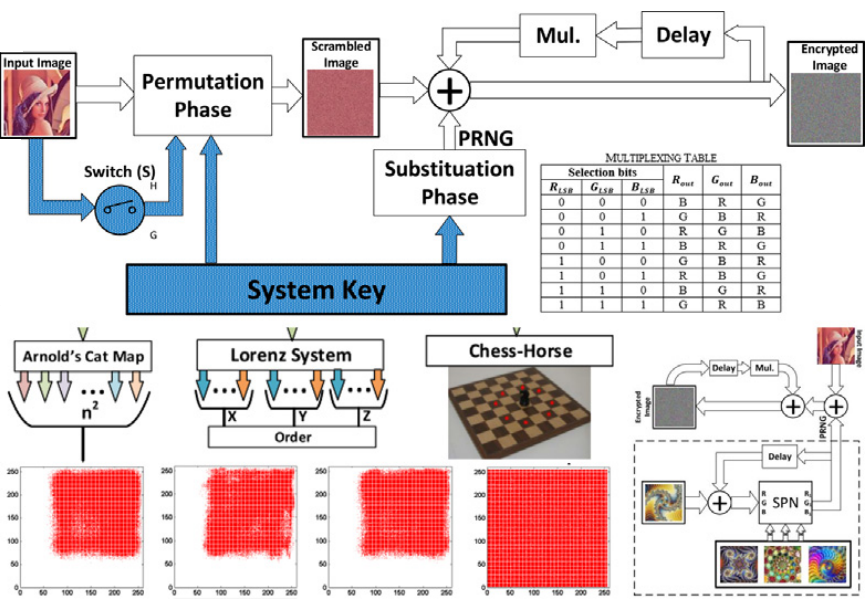
This paper summarizes the symmetric image encryption results of 27 different algorithms, which include substitution-only, permutation-only or both phases. The cores of these algorithms are based on several discrete chaotic maps (Arnold's cat map and a combination of three generalized maps), one continuous chaotic system (Lorenz) and two non-chaotic generators (fractals and chess-based algorithms)