

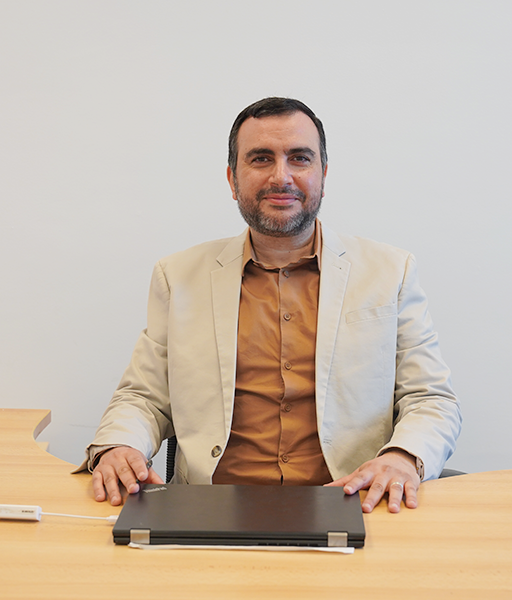


Prof. Walid Al-Atabany

Prof. Walid Al-Atabany

Associate Dean for UG Programs & Director of Centre for Informatics (CIS)

Faculty Building

UB1

Office Number

210

Biography

The academic journey of Prof. Walid Al-Atabany began with earning his Bachelor’s and Master’s degrees in Biomedical Engineering from Cairo University in 1999 and 2004, respectively. In 2010, he obtained his PhD in Biomedical Engineering from Imperial College London, UK. 

Following his PhD, Dr. Al-Atabany joined Newcastle University in the UK as a postdoctoral research associate for two years, where he worked within the research group focusing on visual prosthetics and assistive technologies for the visually impaired, enriching his expertise in this domain. 

Currently, Dr. Walid Al-Atabany holds the position of Professor of Biomedical Engineering at the School of Information Technology and Computer Science (ITCS) at Nile University, Egypt. He also serves as the Director of the Center for Informatics Science (CIS) and as the Vice Dean for Academic Programs at the ITCS School. 

Dr. Al-Atabany’s research interests are highly interdisciplinary, with a primary focus on developing assistive technologies for individuals with visual impairments, particularly in artificial vision and enhancing visual scenes for patients with retinal disorders. His research further extends to artificial intelligence, computer vision, medical signal analysis, and the development of smart healthcare management systems. 

Dr. Al-Atabany has an outstanding scientific record, with over 90 research papers published in prestigious international journals and conferences, achieving more than 6000 citations. 

In recognition of his research contributions, Dr. Walid Al-Atabany has received numerous awards and grants, including the prestigious Research Excellence Award from Helwan University in 2021, and the Prof. Hazem Ezzat Scientific Excellence Award from Nile University in 2023. He was recognized as one of the top 40 researchers with the highest field impact at Helwan University in 2023. He has also been a recipient of two Newton-Mosharafa grants from the British Council in 2015 and 2016, as well as the travel grant from the ARVO Foundation for Eye Research  in 2010, Maryland. 

Achievements
  1. Prof. Walid Al-Atabany has receive the Prof. Hazem Ezzat award for the Outstanding Faculty Researcher from Nile University in 2023.
  2. He also earned the Scientific Excellence Award for having excellent record of international publications, 2021.
  3. He received a 2-year Newton institutional link grant from the British Council to conduct joint research with the School of Electrical and Electronic Engineering at Newcastle University in 2016.
  4. He was awarded a 6-month prestigious Newton travel grant from the British Council to conduct joint research at Newcastle University in 2015.
  5. He won the 2nd prize award from the 2nd Symposium of the Neuroscience Technology Network (NTN2009).
Recent Publications
Conference Paper

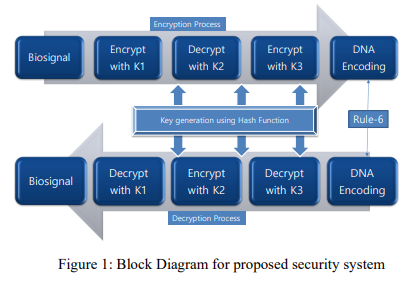
An E-health System for Encrypting Biosignals Using Triple-DES and Hash Function

This Electronic Health (E-Health) is a broad expression that enables the communication between healthcare professionals in handling patient information through the cloud. Exchanging medical data over the public cloud requires securing transferring for the data that's direct many researchers in proposing different secure schemes to enable users to handle data safely without hacking or alternating

Artificial Intelligence
Conference Paper

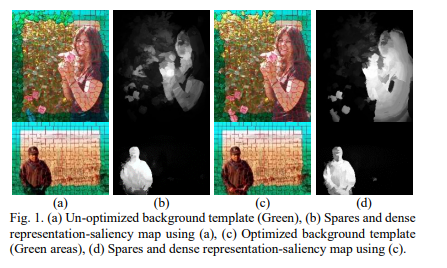
Robust Background Template for Saliency Detection

In this paper, we propose an effective saliency detection method based on dense and sparse representation in-terms of an optimized background template. Firstly, the input image is divided into compact and uniform super-pixels. Then, the optimized background template is produced by introducing boundary conductivity measurement to improve the dense and sparse representation of the image's super

Artificial Intelligence
Conference Paper

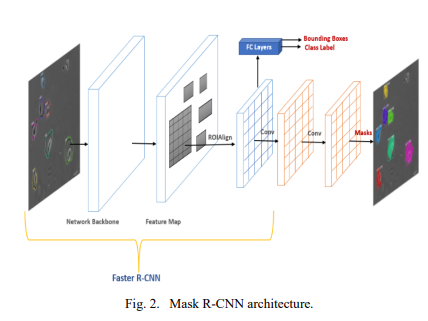
Instance Segmentation of 2D Label-Free Microscopic Images using Deep Learning

The precise detection and segmentation of cells in microscopic image sequences is an essential task in biomedical research, such as drug discovery and studying the development of tissues, organs, or entire organisms. However, the detection and segmentation of cells in phase contrast images with a halo and shade-off effects is still challenging. Lately, Mask Regional Convolutional Neural Network

Artificial Intelligence
Healthcare
Innovation, Entrepreneurship and Competitiveness
Conference Paper

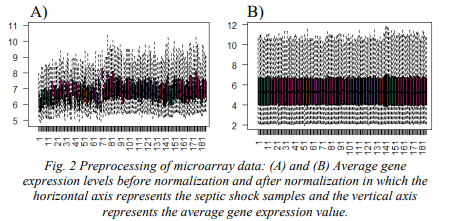
Studying Genes Related to the Survival Rate of Pediatric Septic Shock

Pediatric septic shock is generally considered as a devastating clinical syndrome that can lead to tissue damage and organ failure due to the over exaggerated immune response to an infection. Therefore, in this paper, we attempted to early identify the clinical course of such disease with the aid of peripheral blood T-cells of 181 pediatric patients who admitted to Intensive Care Unit (ICU)

Artificial Intelligence
Healthcare
Innovation, Entrepreneurship and Competitiveness
Conference Paper

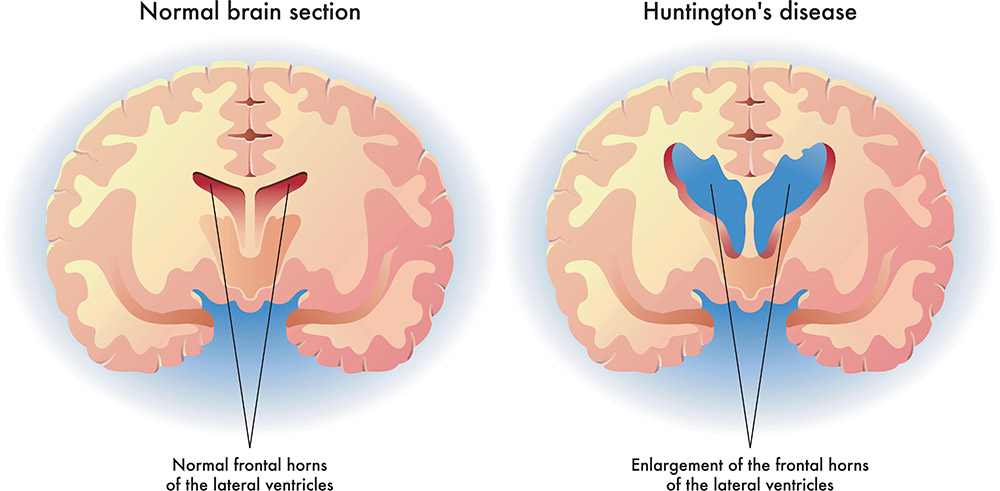
INVESTIGATION OF DIFFERENTIALLY EXPRESSED GENE RELATED TO HUNTINGTON'S DISEASE USING GENETIC ALGORITHM

neurodegenerative diseases have complex pathological mechanisms. Detecting disease-associated genes with typical differentially expressed gene selection approaches are ineffective. Recent studies have shown that wrappers Evolutionary optimization methods perform well in feature selection for high dimensional data, but they are computationally costly. This paper proposes a simple method based on a

Artificial Intelligence
Healthcare
Software and Communications
Research Tracks
  • Assistive and Augmented Vision Systems for the Visually Impaired 

  • Medical Image Processing and AI for Diagnostic Applications 

  • Machine Learning and Computational Intelligence in Biomedical Engineering 

  • Human-Machine Interaction and Sensory Substitution for Accessibility 

  • Intelligent Clinical Engineering and Data-Driven Hospital Management Systems 
Projects
IMG
Research Project

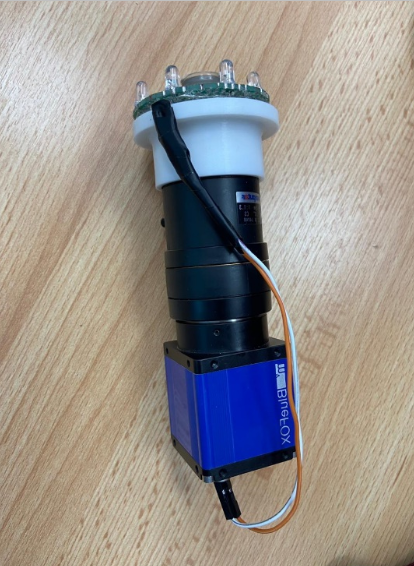
Portable Ophthalmoscope for Telemedicine Retinopathy of Prematurity (ROP) Screening in Egypt

Few diseases affect human life and personal destinies more than the loss of the ability to see. In adults, visual impairment is associated with a loss of personal independence inducing large personal and societal costs. According to the World Health Organization, 39 million people are legally blind. In Egypt, there are almost 1 million individuals (~1% of the population) with sight loss. The