





Dr. Mustafa Elattar

Dr. Mustafa Elattar

Program Director of Artificial Intelligence (AI)

Faculty Office Ext.

1754

Faculty Building

UB1

Office Number

210

Biography

Mustafa Elattar was born in Cairo, Egypt, in 1986. He is a distinguished expert in biomedical engineering, medical imaging, image analysis, and artificial intelligence. He began his academic career at Cairo University, earning a bachelor's degree in Systems and Biomedical Engineering in 2008. He later pursued his Ph.D. in Biomedical Engineering and Physics at the Faculty of Medicine, University of Amsterdam, graduating in 2016. His doctoral research at the Academic Medical Center focused on preoperative planning for transcatheter aortic valve implantation (TAVI), demonstrating his strength in applying advanced computational methods to improve clinical outcomes. 

Following his Ph.D., Dr. Elattar completed a postdoctoral fellowship at the Netherlands Cancer Institute (NKI), where he contributed to cutting-edge research in image-guided radiotherapy. In August 2017, he joined Nile University as an Assistant Professor at the School of Information Technology and Computer Science and currently serves as the Director of the Artificial Intelligence undergraduate program. He has been instrumental in shaping the next generation of AI leaders in Egypt and driving innovation across multiple governmental and healthcare institutions. 

Dr. Elattar brings a unique blend of academic insight and industrial experience, having held R&D roles at Diagnosoft Inc., 3mensio B.V., Pie Medical N.V., and Myocardial Solutions Inc. In 2018, he founded Intixel Co. S.A.E., a company dedicated to AI-powered healthcare solutions, where he continues to serve as CEO. He also co-founded Ramyro Inc., a U.S. company providing intelligent medical software and AI orchestration tools for radiology and diagnostics, where he is currently the CTO and Vice President. 

Dr. Elattar has authored more than 100 publications in peer-reviewed journals and conferences and has secured national and international research grants. His work bridges academia, industry, and clinical impact—driving forward the use of AI in medical diagnostics, digital transformation, and patient-centered care. ‎ 

Achievements
  1. Initiated the first African network for AI and Medical imaging enthusiasts, researchers and scientists.
  2. IVLP Impact Award from U.S. Department of State (2022).
  3. Best poster award at the Novel Intelligent and Leading Emerging Sciences Conference (2019).
  4. Top 5 startups in Young Business Hub Entrepreneurship Investment Summit, Bahrain (2019).
  5. Fareed Bader Award in World Entrepreneurs and Investments Forum (WEIF) (2019).
  6. Pitch deck winner and winning the best Health-tech startup at Takeoff Istanbul International Startup Summit after being evaluated by the jury members and 150+ mentors (2019).
  7. Top 10 Startups to be selected for the “2WiN Mentoring Program” supported by the German Chamber of Commerce (2019).
  8. Best poster in the Postgraduate Research Forum, Nile University (2018).
  9. Best Support for research assistant from Nile University (2018).
  10. Best Support for research assistant from Banque Misr (2017).
  11. 3rd place in Left ventricular segmentation challenge from cardiac MRI (STACOM 2011).
  12. Best poster in Image Analysis and Recognition Conference (2010).
  13. Full scholarship for master’s studies at Nile University (2008).
  14. Fourth Place in Made in Egypt (MIE) competition for the best graduation project (2007).
Recent Publications
Conference Paper

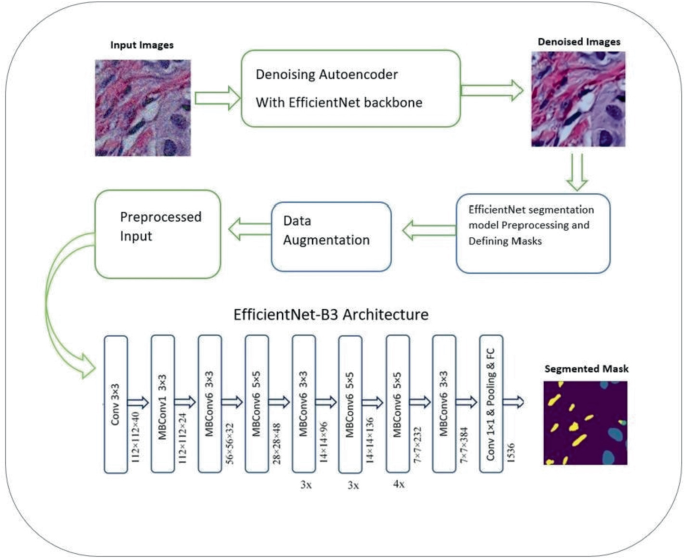
Revolutionizing Cancer Diagnosis Through Hybrid Self-supervised Deep Learning: EfficientNet with Denoising Autoencoder for Semantic Segmentation of Histopathological Images

Machine Learning technologies are being developed day after day, especially in the medical field. New approaches, algorithms and architectures are implemented to increase the efficiency and accuracy of diagnosis and segmentation. Deep learning approaches have proven their efficiency; these approaches include architectures like EfficientNet and Denoising Autoencoder. Accurate segmentation of nuclei

Artificial Intelligence
Healthcare
Circuit Theory and Applications
Software and Communications
Conference Paper

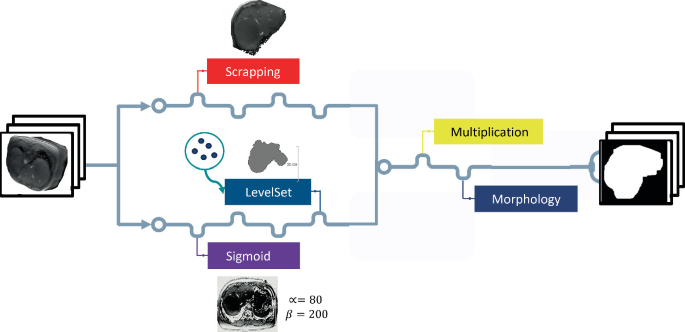
Iterative Refinement Algorithm for Liver Segmentation Ground-Truth Generation Using Fine-Tuning Weak Labels for CT and Structural MRI

Medical image segmentation is indicated in a number of treatments and procedures, such as detecting pathological changes and organ resection. However, it is a time-consuming process when done manually. Automatic segmentation algorithms like deep learning methods overcome this hurdle, but they are data-hungry and require expert ground-truth annotations, which is a limitation, particularly in

Artificial Intelligence
Healthcare
Circuit Theory and Applications
Software and Communications
Conference Paper

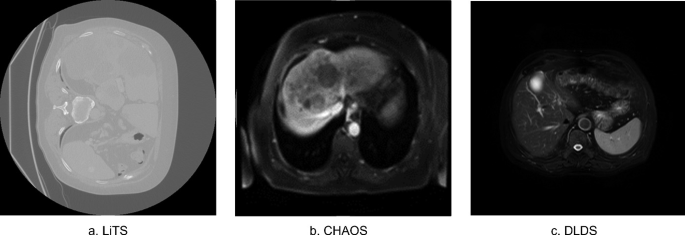
Cross-Modality Deep Transfer Learning: Application to Liver Segmentation in CT and MRI

Liver diseases cause up to two million deaths yearly. Their diagnosis and treatment plans require an accurate assessment of the liver structure and tissue characteristics. Imaging modalities such as computed tomography (CT) and Magnetic resonance (MR) can be used to assess the liver. CT has better spatial resolution compared to MR, which has better tissue contrast. Each modality has its own

Artificial Intelligence
Healthcare
Circuit Theory and Applications
Software and Communications
Conference Paper

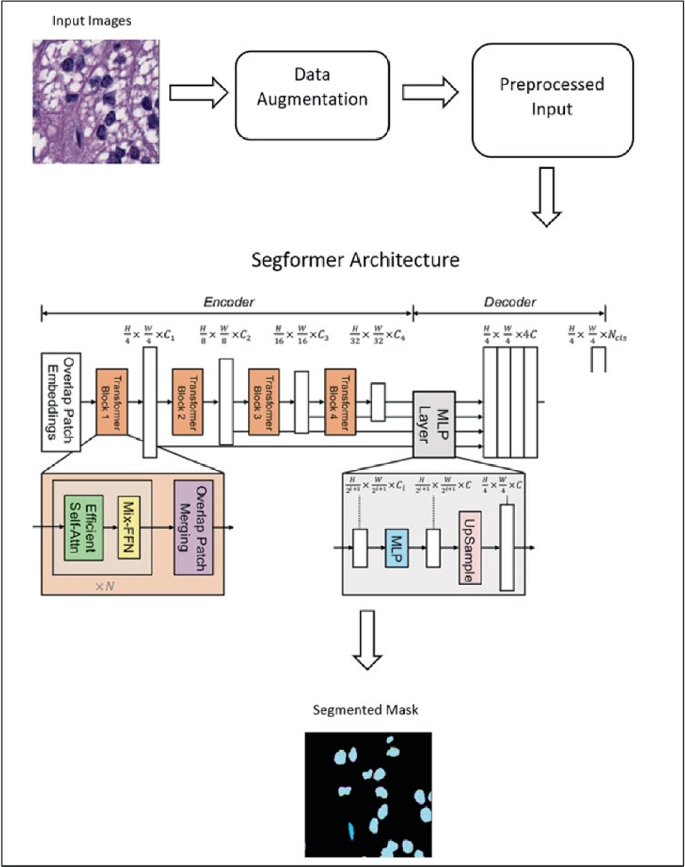
Efficient Semantic Segmentation of Nuclei in Histopathology Images Using Segformer

Segmentation of nuclei in histopathology images with high accuracy is crucial for the diagnosis and prognosis of cancer and other diseases. Using Artificial Intelligence (AI) in the segmentation process enables pathologists to identify and study the unique properties of individual cells, which can reveal important information about the disease, its stage, and the best treatment approach. By using

Artificial Intelligence
Healthcare
Energy and Water
Circuit Theory and Applications
Software and Communications
Conference Paper

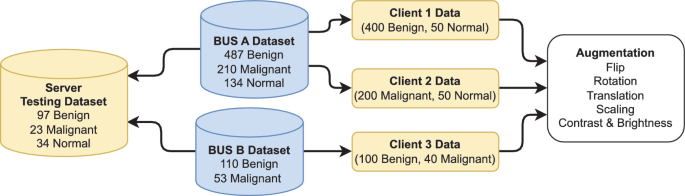
A Novel Approach to Breast Cancer Segmentation Using U-Net Model with Attention Mechanisms and FedProx

Breast cancer is a leading cause of death among women worldwide, emphasizing the need for early detection and accurate diagnosis. As such Ultrasound Imaging, a reliable and cost-effective tool, is used for this purpose, however the sensitive nature of medical data makes it challenging to develop accurate and private artificial intelligence models. A solution is Federated Learning as it is a

Artificial Intelligence
Healthcare
Circuit Theory and Applications
Software and Communications
Journal

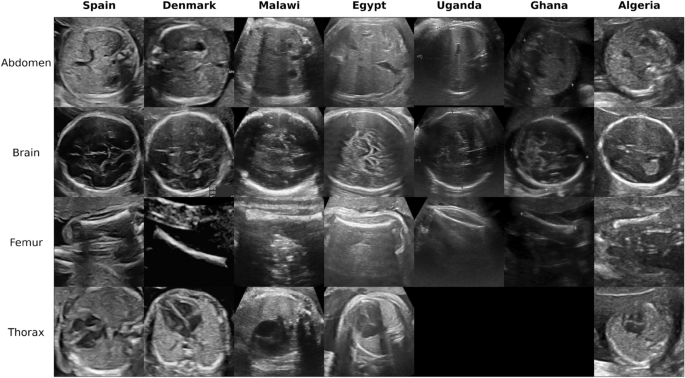
Author Correction: Generalisability of fetal ultrasound deep learning models to low-resource imaging settings in five African countries (Scientific Reports, (2023), 13, 1, (2728), 10.1038/s41598-023-29490-3)

The Funding section in the original version of this Article was incomplete. “This work received funding from the European Union’s 2020 research and innovation programme under Grant Agreement No. 825903 (euCanSHare project), as well as from the Spanish Ministry of Science, Innovation and Universities under grant agreement RTI2018-099898-B-I00. Additionally, the research leading to these results has

Artificial Intelligence
Circuit Theory and Applications
Innovation, Entrepreneurship and Competitiveness
Conference Paper

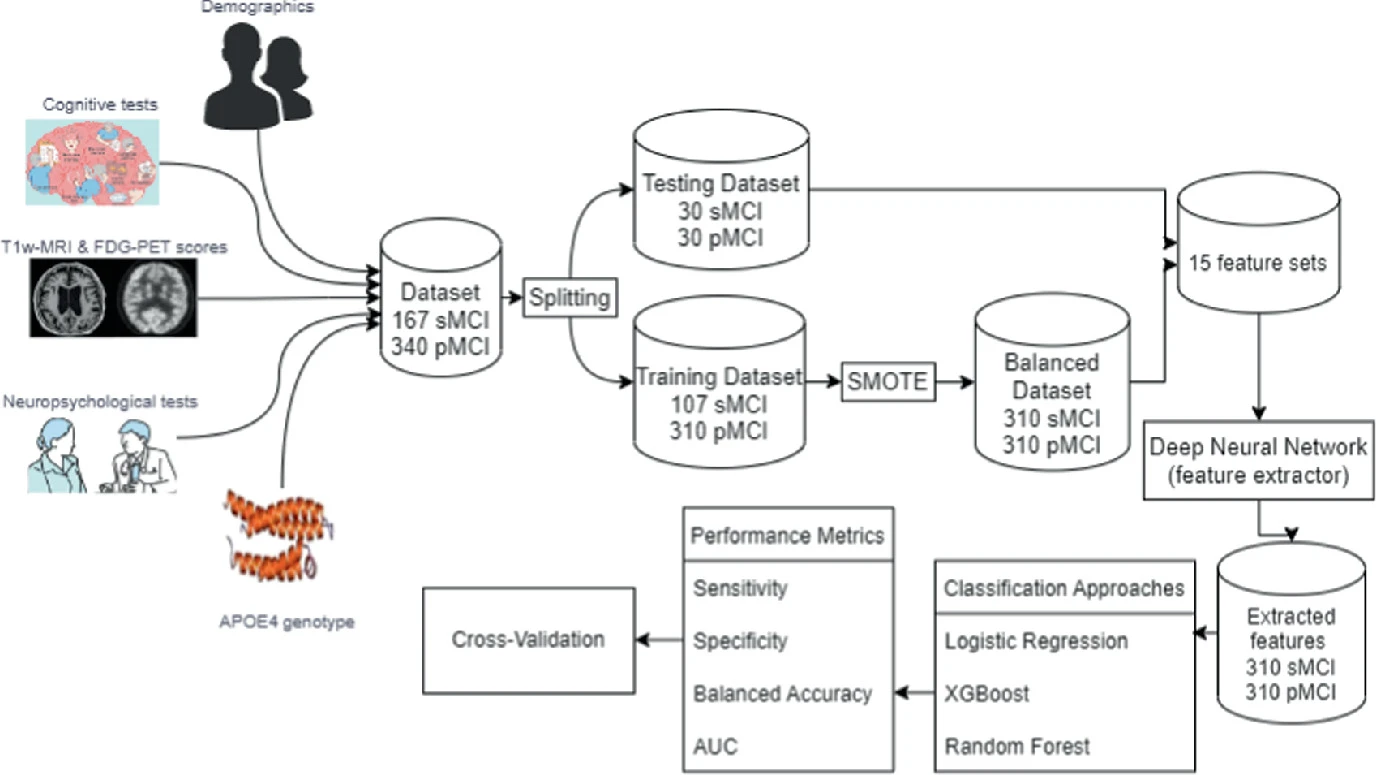
A Novel Diagnostic Model for Early Detection of Alzheimer’s Disease Based on Clinical and Neuroimaging Features

Alzheimer’s Disease (AD) is a dangerous disease that is known for its characteristics of eroding memory and destroying the brain. The classification of Alzheimer's disease is an important topic that has recently been addressed by many studies using Machine Learning (ML) and Deep Learning (DL) methods. Most research papers tackling early diagnosis of AD use these methods as a feature extractor for

Artificial Intelligence
Healthcare
Circuit Theory and Applications
Software and Communications
Journal

Generalisability of fetal ultrasound deep learning models to low-resource imaging settings in five African countries

Most artificial intelligence (AI) research and innovations have concentrated in high-income countries, where imaging data, IT infrastructures and clinical expertise are plentiful. However, slower progress has been made in limited-resource environments where medical imaging is needed. For example, in Sub-Saharan Africa, the rate of perinatal mortality is very high due to limited access to antenatal

Artificial Intelligence
Healthcare
Circuit Theory and Applications
Software and Communications
Innovation, Entrepreneurship and Competitiveness
Journal

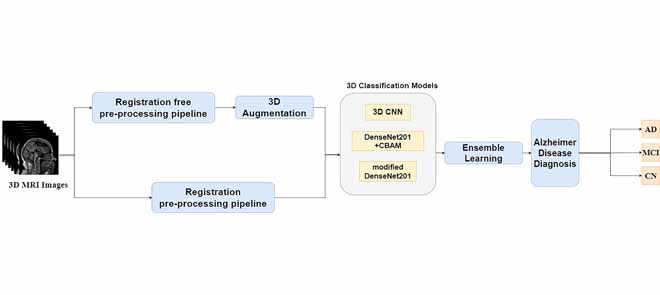
Automatic Early Diagnosis of Alzheimer's Disease Using 3D Deep Ensemble Approach

Alzheimer's disease (AD) is considered the 6 th leading cause of death worldwide. Early diagnosis of AD is not an easy task, and no preventive cures have been discovered yet. Having an accurate computer-aided system for the early detection of AD is important to help patients with AD. This study proposes a new approach for classifying disease stages. First, we worked on the MRI images and split

Artificial Intelligence
Healthcare
Circuit Theory and Applications
Software and Communications
Research Tracks
  • Medical Imaging
  • Artificial Intelligence
  • Image Analysis
  • Knowledge Aggregation
  • Graph Optimization
  • Clinical Research
  • Computational Cardiology
Projects
a
Research Project

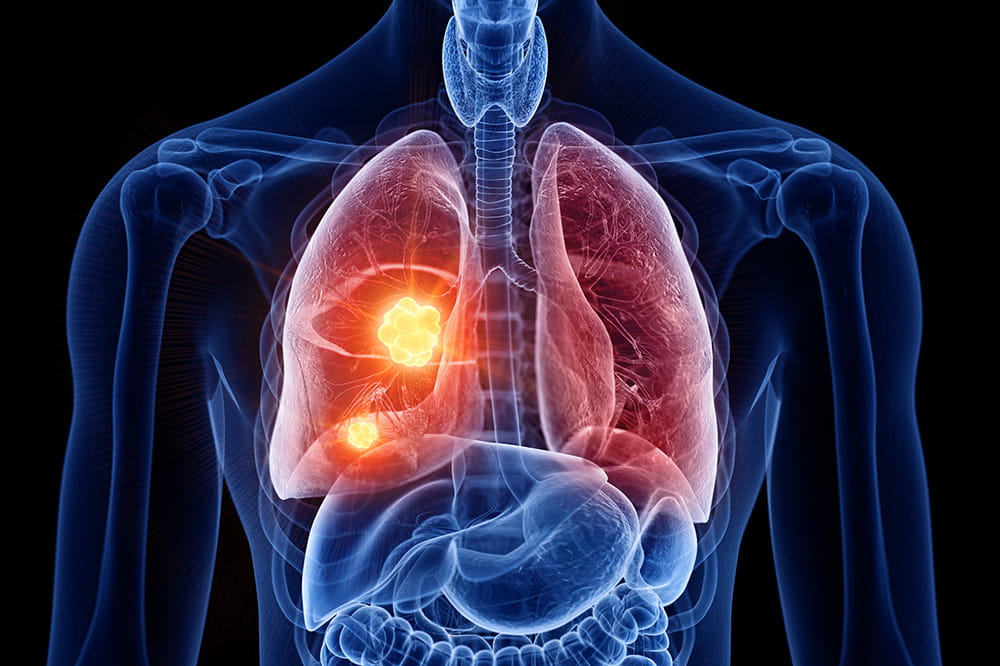
Lung Cancer Detection in Chest X-Ray Images Empowered by 3D Computed Tomography Deep Convolutional Radiomics (CXRClear)
Objective/Contributions: Cancer is treatable if it is discovered at an early stage, and lung cancer screening is a critical component in a preventive care protocol. Although CT imaging affords higher spatial resolution and 3D density information than digital chest X-rays, there are still limitations to having it as a cheap and fast method for rural areas outreach. These limitations are outlined in
3
Research Project

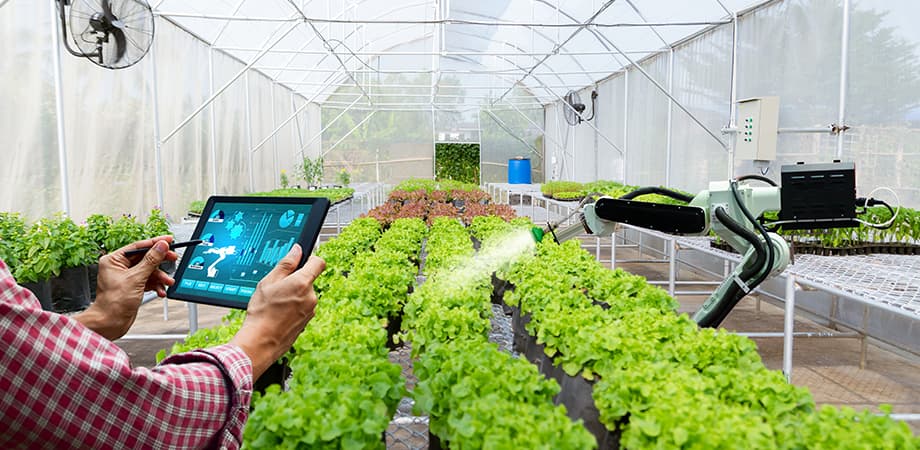
Smart Agricultural Clinic: Egyptian Farmer Electronic Platform for the Future

Objective/Contributions: Smart agricultural clinic (SAC) aims to: 1) Provide an integrated end-to-end digital system to effectively deliver personalized agriculture extension and veterinary services, including best cultivation, fertilization and breeding practices, to farmers and animal producers through the use of mobile/handheld devices. 2) Use advanced computer vision and deep learning
1
Research Project

Artificial Intelligence Based Cloud Computing for Autonomous Traffic Management

Automobile-related deaths rank as one of the most common causes of death in many places, particularly developing countries; Egypt loses about 12,000 lives due to road traffic crashes every year. The greatest danger to human beings is not cars but people themselves because cars are not dangerous if driven by care and more attention. Cell phone use, whether by talking on the phone or texting