


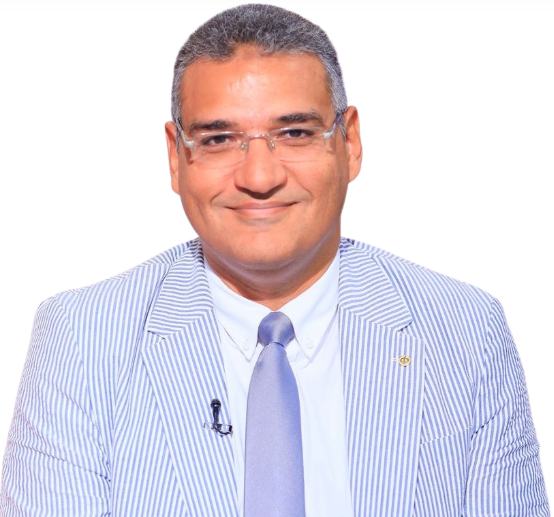


Dr. Islam Tharwat

Dr. Islam Tharwat

Associate Professor

Faculty Office Ext.

1899

Faculty Building

UB1

Office Number

202

Biography

Islam Tharwat Abdel Halim received his B.Sc., M.Sc., and Ph.D. degrees in Computer and Systems Engineering from the Faculty of Engineering, Ain Shams University, Cairo, Egypt. His Ph.D. dissertation received the Best Ph.D. Thesis Award. He is currently an Associate Professor in the School of Information Technology and Computer Science at Nile University (NU), Giza, Egypt. His research focuses on artificial intelligence, cybersecurity, digital transformation, Internet of Things (IoT), edge computing, and intelligent systems, with particular emphasis on secure AI-enabled infrastructures, smart applications, and the performance and security of modern communication networks. He has authored numerous peer-reviewed publications in leading international journals and conferences, including IEEE Intelligent Transportation Systems Magazine, Computer Networks (Elsevier), and Wireless Networks (Springer).

Dr. Islam has more than 20 years of experience in information technology, artificial intelligence, and digital transformation across academia, industry, and government. He currently serves as a member of the Standing Committee for Artificial Intelligence Applications at the Egyptian Ministry of Finance, where he contributes to national AI and digital transformation initiatives. He previously served on the Digital Transformation Committee at Nile University and contributed to developing the digital transformation training framework for the Egyptian government. He has also participated in several national projects involving the Ministry of Finance, the Egyptian Tax Authority, the Customs Authority, and the Government Certificate Authority.

He is a Senior Member of the IEEE and currently serves as the IEEE Computer Society Region 8 Coordinator (Europe, Africa, and the Middle East). He is also the founder and co-chair of the IEEE Computer Society AI Caravan initiative, Chair of the IEEE Egypt Section Consultants Network, and Vice Chair of the ACM Cairo Chapter and the IEEE Computer Society Egypt Chapter.

Through these leadership roles, he has led and supported numerous international initiatives that promote professional development, technical excellence, artificial intelligence awareness, and industry–academia collaboration across the region. Dr. Abdel Halim has played key roles in organizing numerous local and international conferences, serving as an editor, program committee member, session chair, keynote and invited speaker, and technical committee member for various conferences and journals.

He is also a member of several international technical committees, including the IEEE Computer Society Special Technical Community on Blockchain. In addition to his academic and professional contributions, he holds several internationally recognized professional certifications from leading technology companies, including Cisco, Microsoft, VMware, and IBM. His work continues to bridge academic research, professional practice, and public-sector innovation, with a strong focus on advancing the responsible adoption of artificial intelligence and digital transformation technologies.

Achievements
  • His Ph.D. thesis was granted the best thesis award.
  • He has obtained several accredited certifications from major global IT companies such as Cisco, Microsoft, VMware, and IBM.
  • He contributed to the establishment and organization of several local and international conferences in the field of computer engineering and sciences, serving as a session chair, invited speaker, program committee member, and editor for various international conferences and journals.

Recent Publications
Conference Paper

Statistical Investigation of Scientific Journals Impact Factors in Relation to Benford's Law

Benford's law (BL) has been used as a tool for the detection of possible data manipulation in datasets. The statistics of the first digit(s) of the observed values are compared to a set of expected values given by BL, and violations signal possible data anomalies. Though this method is first used for economical purposes, it has been recently used in bibliometric statistical analyses. The method

Circuit Theory and Applications
Journal

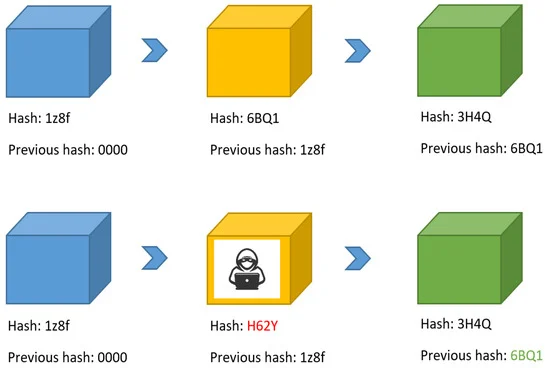
Smart Automotive Diagnostic and Performance Analysis Using Blockchain Technology

The automotive industry currently is seeking to increase remote connectivity to a vehicle, which creates a high demand to implement a secure way of connecting vehicles, as well as verifying and storing their data in a trusted way. Furthermore, much information must be leaked in order to correctly diagnose the vehicle and determine when or how to remotely update it. In this context, we propose a

Artificial Intelligence
Healthcare
Energy and Water
Circuit Theory and Applications
Software and Communications
Mechanical Design
Innovation, Entrepreneurship and Competitiveness
Conference Paper

Evaluating the Performance of Lightweight Block Ciphers for Resource-Constrained IoT Devices

In the context of the Internet of Things (IoT), lightweight block ciphers are of vital importance. Due to the nature of the devices involved, traditional security solutions can add overhead and perhaps inhibit the application's objective due to resource limits. Lightweight cryptography is a novel suite of ciphers that aims to provide hardware-constrained devices with a high level of security while

Artificial Intelligence
Energy and Water
Circuit Theory and Applications
Software and Communications
Journal

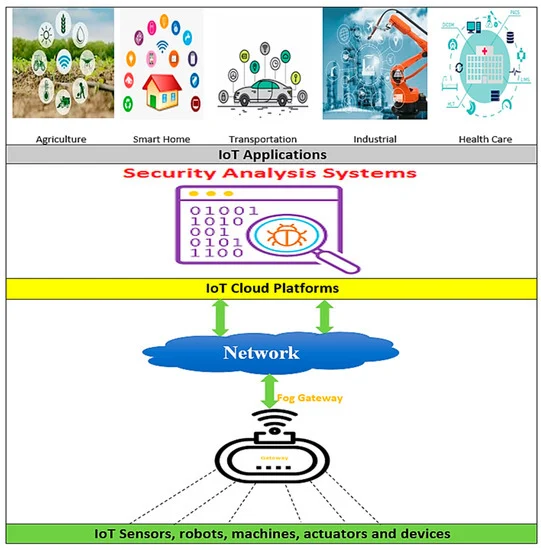
HSAS-MD Analyzer: A Hybrid Security Analysis System Using Model-Checking Technique and Deep Learning for Malware Detection in IoT Apps

Established Internet of Things (IoT) platforms suffer from their inability to determine whether an IoT app is secure or not. A security analysis system (SAS) is a protective shield against any attack that breaks down data privacy and security. Its main task focuses on detecting malware and verifying app behavior. There are many SASs implemented in various IoT applications. Most of them build on

Artificial Intelligence
Software and Communications
Research Tracks
  • Cybersecurity.
  • Software and Systems.
  • Wireless Networks
  • Computer Security
  • Cloud Computing and IoT