



Publications
Publications
Filter by
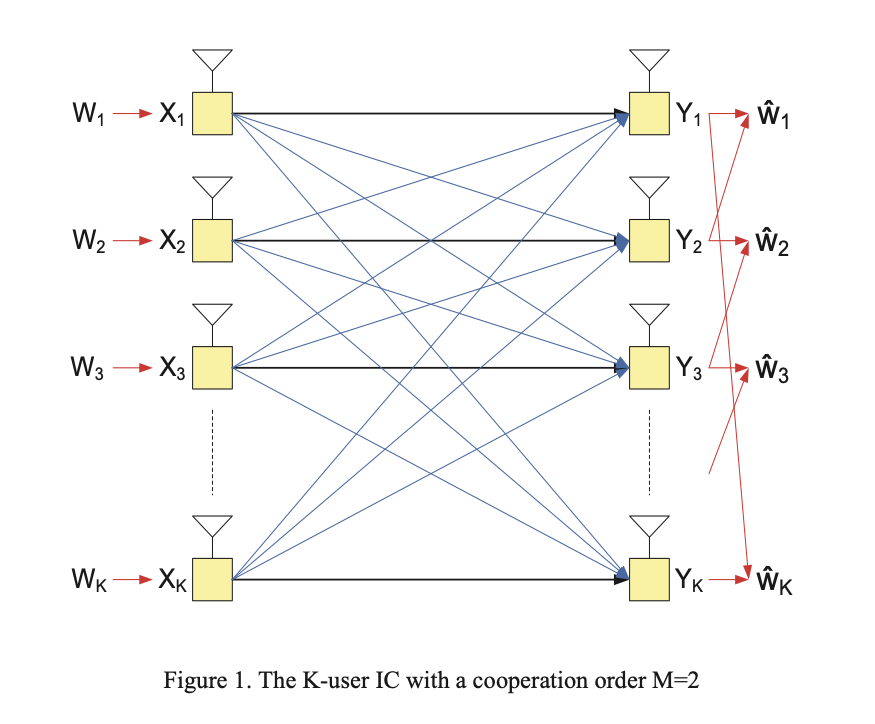
Achievable degrees of freedom of the K-user interference channel with partial cooperation
In this paper, we consider the K-user interference channel with partial cooperation, where a strict subset of the K users cooperate. For the K-user interference channel with cooperating subsets of length M, the outer bound of the total degrees of freedom is KM/(M+1). In this paper, we propose a signal space-based interference alignment scheme that proves the achievability of these degrees of

Kalman filter-based tracking of a device-free passive entity in wireless environments
Device-free passive (DfP) localization has been recently proposed to allow localizing a stationary entity that neither carries a device nor participates actively in the localization process. In this paper, we present a Kalman filter-based system that enables tracking a continuously moving entity in a typical wireless environment rich in multipath. The concept behind DfP tracking is that the
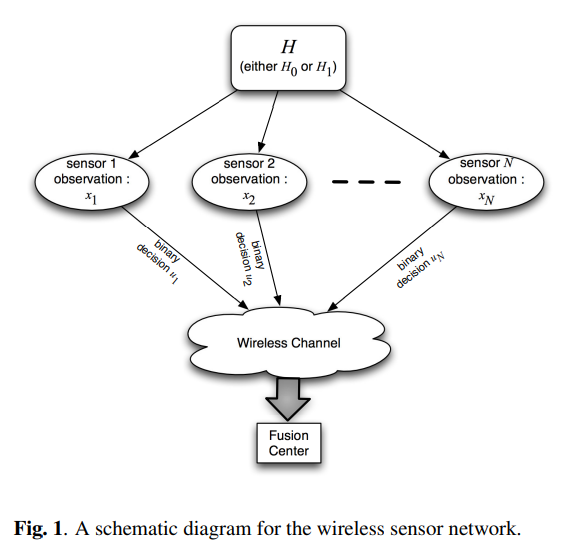
Censoring for improved performance of distributed detection in wireless sensor networks
In this paper, we consider the problem of binary hypothesis testing for distributed detection in wireless sensor networks in which a transmission censoring scheme is employed. The sensor nodes transmit binary decisions to the fusion center (FC) for final decision making. Sensor nodes with unreliable observation samples censor transmission to FC. By having two thresholds at each sensor node, a
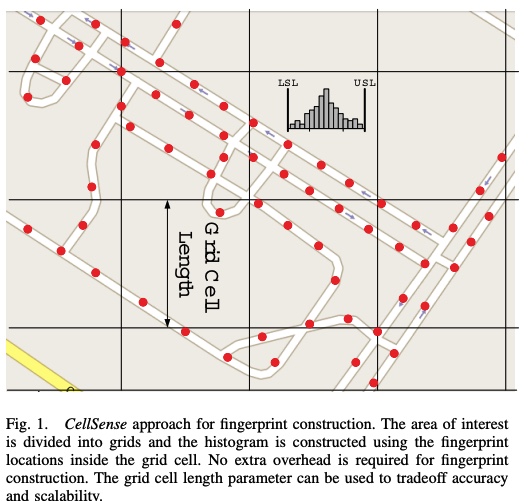
A hidden Markov model for localization using low-end GSM cell phones
Research in location determination for GSM phones has gained interest recently as it enables a wide set of location based services. RSSI-based techniques have been the preferred method for GSM localization on the handset as RSSI information is available in all cell phones. Although the GSM standard allows for a cell phone to receive signal strength information from up to seven cell towers, many of
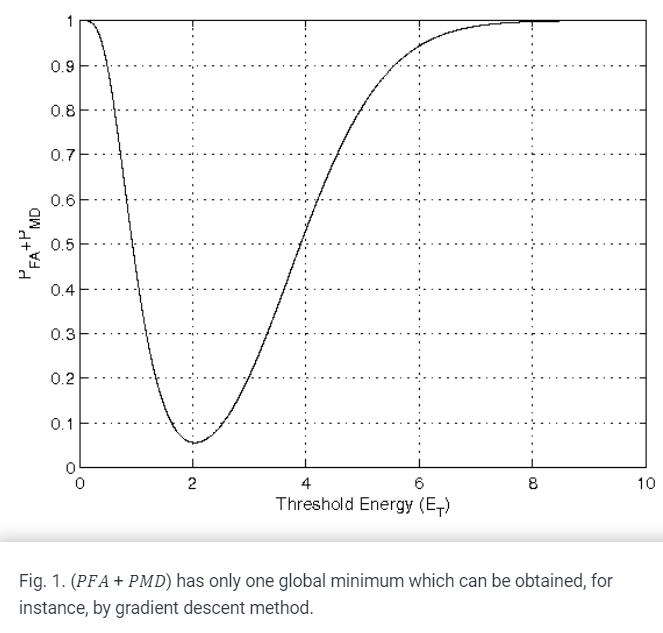
Optimization of channel sensing time and order for cognitive radios
In this paper we consider a single cognitive radio seeking a transmission opportunity by sequentially sensing a number of statistically independent primary channels. We study the joint optimization of the time spent to sense a channel, the decision threshold to determine whether the channel is free or busy, together with the order with which the channels are sensed. The sensing time and decision
A source authentication scheme using network coding
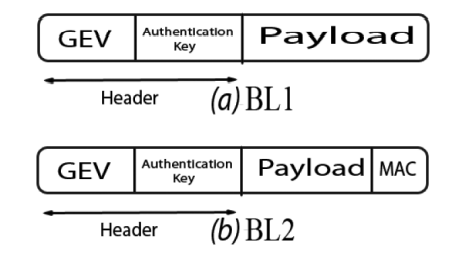
In this paper, we explore the security merits of network coding and potential trade-offs with the widely accepted throughput benefits, especially in multicast scenarios. In particular, we propose a novel Source Authentication using Network Coding (SANC) scheme. Towards this objective, we propose a general framework for embedding the authentication information within the network coding Global
A novel power gated digitally controlled oscillator
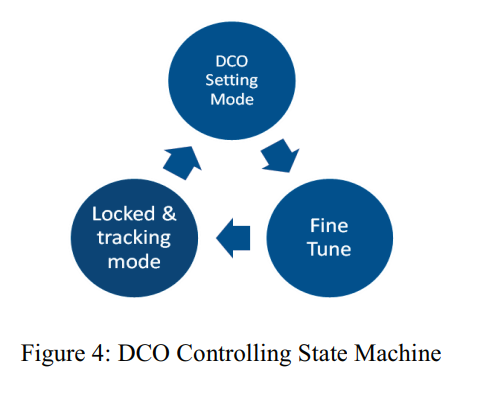
In this paper a novel power gated digitally controlled oscillator (DCO) is presented. The DCO is suitable for integration in various systems such as clock generation circuits, clock and data recovery, and clocking schemes for high speed links. Simulations of the proposed DCO on 65nm TSMC technology show frequency range of 2.5 GHz to 6.8 GHz across all corners. The proposed DCO consumes only 1.7 mW

Slow-switching-limit loss removal in SC DC-DC converters using adiabatic charging
A novel technique to remove the slow-switching-limit (SSL) loss in switched-capacitor (SC) dc-dc converters is presented. A small series inductor is cascaded with an SC converter causing adiabatic charging of the converter's energy-transfer capacitors. In this work, the theory and necessary conditions for SSL loss elimination through an inductive output filter are derived. The new topology enables
A 12Gbps all digital low power SerDes transceiver for on-chip networking
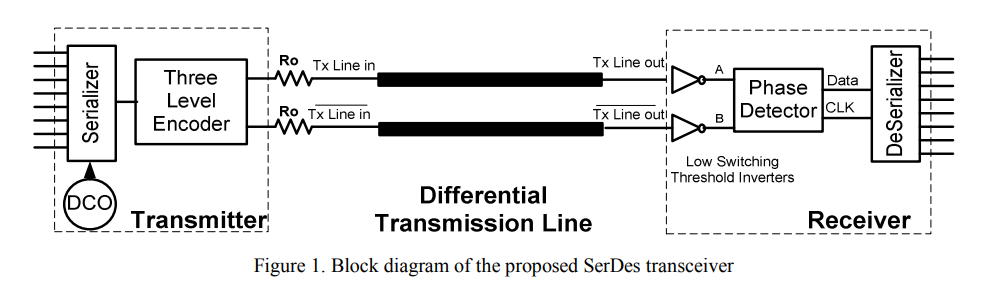
In this paper, a new self-timed signaling technique for reliable low-power on-chip SerDes (Serialization and DeSerialization) links is presented. The transmitter serializes 8 parallel bits at 1.5GHz, and multiplexes the 12Gbps serial data stream with a 24GHz clock on a single line using three level signaling. This new signaling technique enables the receiver to recover the clock from the data with
Modeling user behavior and infrastructure level of service: An agent-based simulation approach
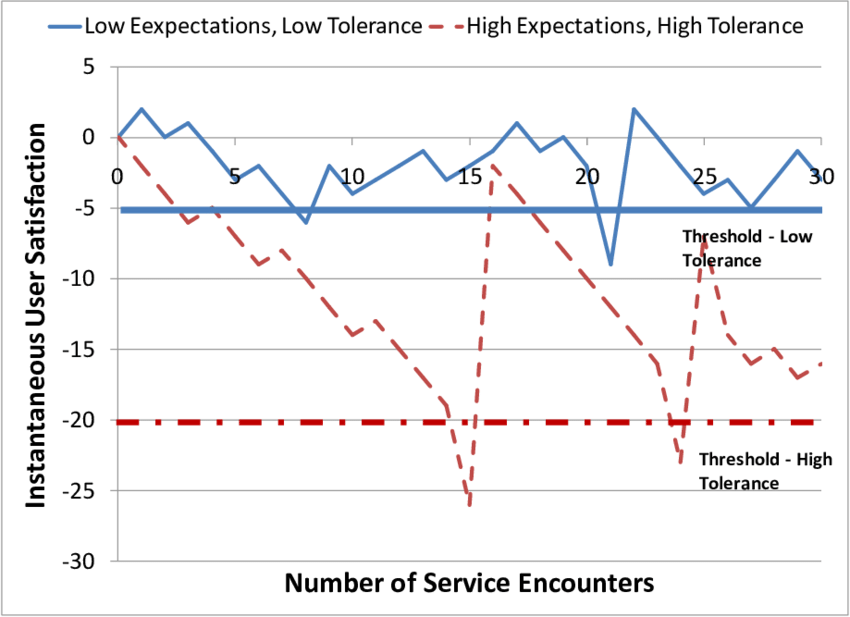
Traditional modeling frameworks used for infrastructure asset management have suffered from two main shortcomings. Most approaches have focused their modeling efforts on the infrastructure asset itself, thereby ignoring the multitude of interactions that occur between other entities. In addition, an a-priori behavior of all elements in the modeling environment has always been assumed. This paper