



Publications
Publications
Filter by
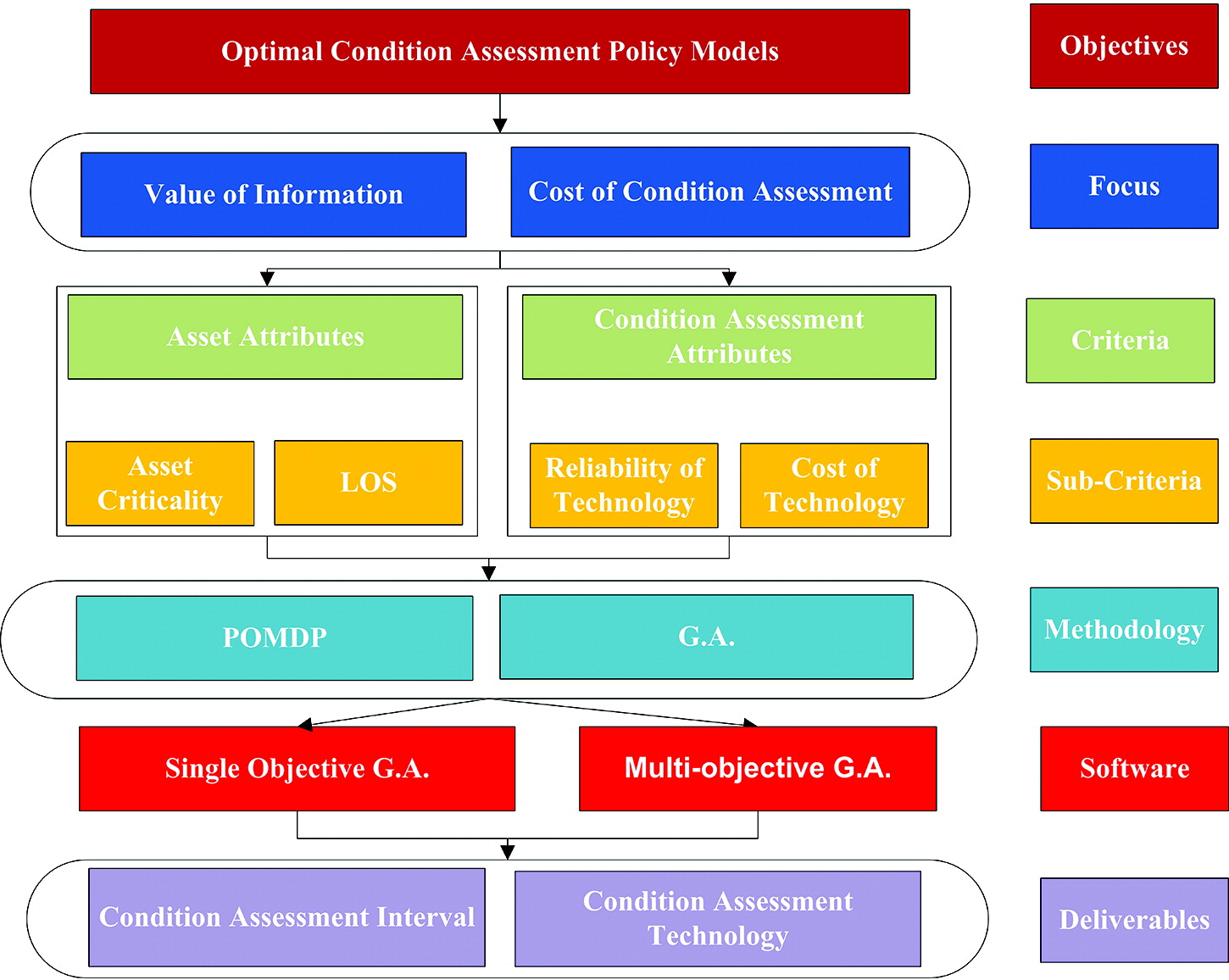
Multiobjective genetic algorithm to allocate budgetary resources for condition assessment of water and sewer networks
This paper presents a framework for optimizing condition assessment policies by balancing the revealed value of information with the cost of obtaining such information. The computational platform is based on augmenting the asset condition state with an expected level of accuracy. Inaccuracies due to condition assessment reliability are evaluated using the partially observable Markov decision
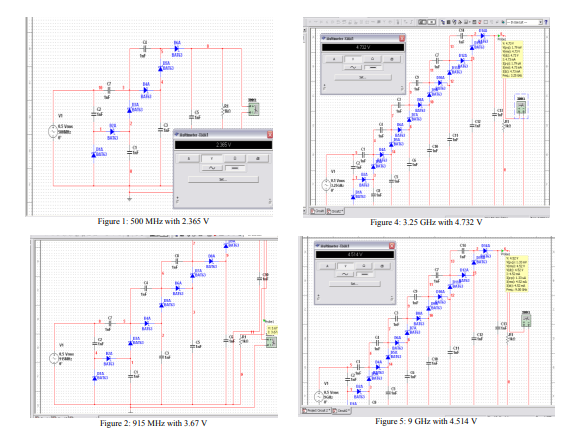
Frequency survey simulation for developing novel radio frequency energy harvesting model
Renewable Energy sources are the center of attraction for research and development all over the world nowadays, the demand of a lasting cheap source of energy that is environmental friendly, is the main challenge recently. Energy Harvesting is a new technology that is going to make a revolution in the coming decade. Energy Harvesting is a technique to provide alternative sources of energy that are
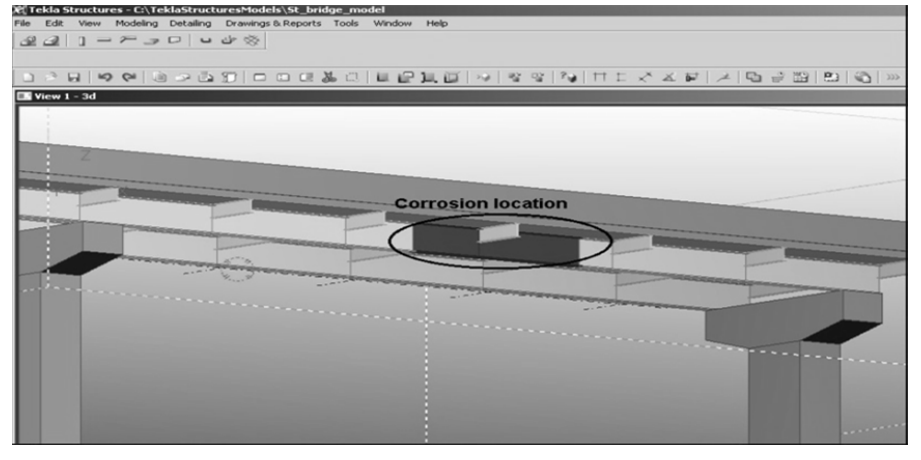
Bridge information modeling in sustainable bridge management
Bridge Management Systems (BMS) play a crucial role in maintenance and rehabilitation decisions related to bridges. This paper presents using Bridge Information Modeling (BrIM) framework that adopts BMS features including; databases, inspection module, and condition assessment module. The proposed BrIM framework creates a database of bridges' components and generates inspection spreadsheets. It
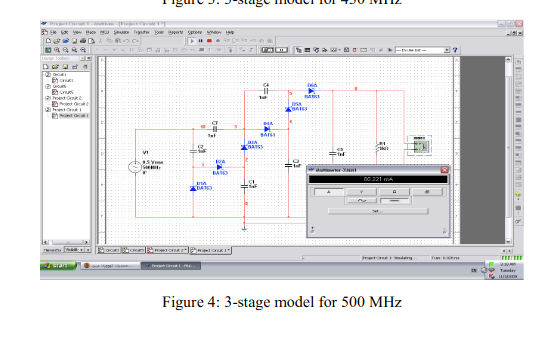
Novel radio frequency energy harvesting model
Energy and Environment, both are the main concern for every researcher allover the world. Alternative energy sources that are environmental friendly became the challenge to satisfy world needs. Oil and Gas are no more the main source of Energy, consequently the demand of an everlasting cheap source of energy that is environmental friendly, is the main goal recently. During the last decade, power
A minimum-delay cross-layer transmission policy for cognitive multi-access networks with imperfect sensing
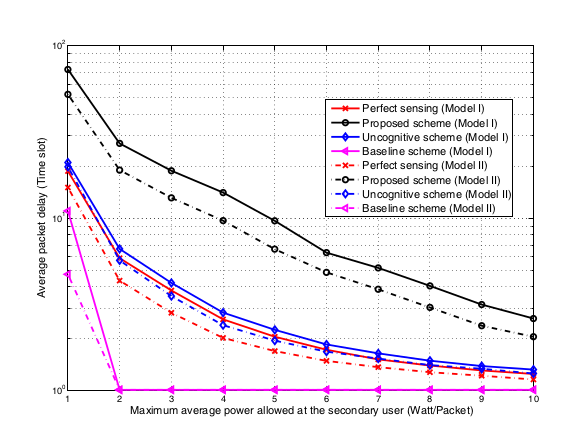
A cognitive network is considered in which a primary user and a secondary user are transmitting to a common receiver. Successive interference cancellation is performed at the common receiver to guarantee that no interference is experienced by the primary user. At the beginning of each time slot, the secondary user senses the channel of the primary user to determine if the primary user is active or
A new achievable DoF region for the 3-user M × N symmetric interference channel
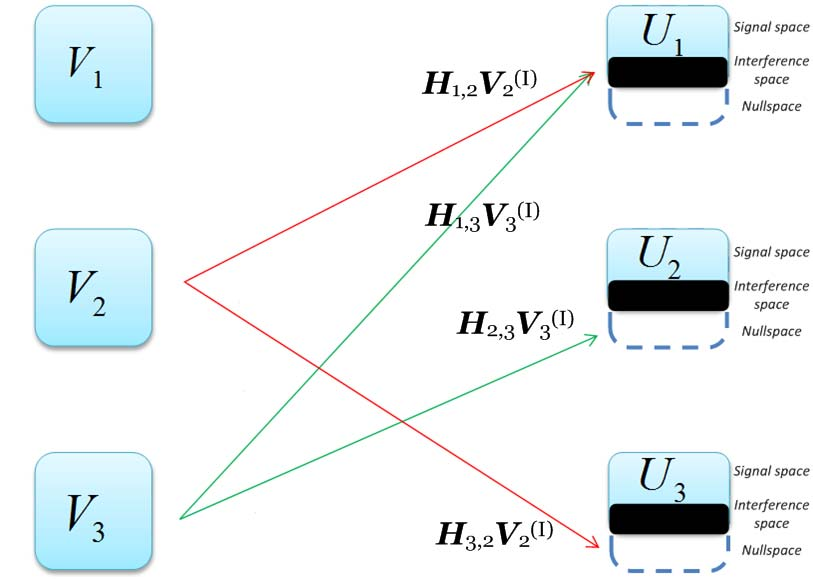
In this paper, the 3-user Gaussian MIMO interference channel with M antennas at each transmitter and N antennas at each receiver is considered. It is assumed that the channel coefficients are constant and known to all transmitters and receivers. A novel scheme is presented that spans a new achievable degrees of freedom region. For some values of M and N, the proposed scheme achieves higher number
On the diversity gain region of the Z-interference channels
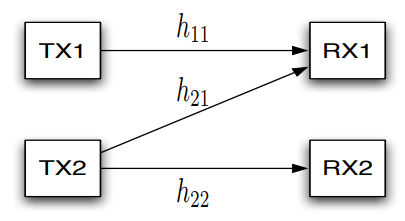
In this work, we analyze the diversity gain region (DGR) of the single-antenna Rayleigh fading Z-Interference channel (ZIC). More specifically, we characterize the achievable DGR of the fixed-power split Han-Kobayashi (HK) approach under these assumptions. Our characterization comes in a closed form and demonstrates that the HK scheme with only a common message is a singular case, which achieves
Buffer-aware power control for cognitive radio networks
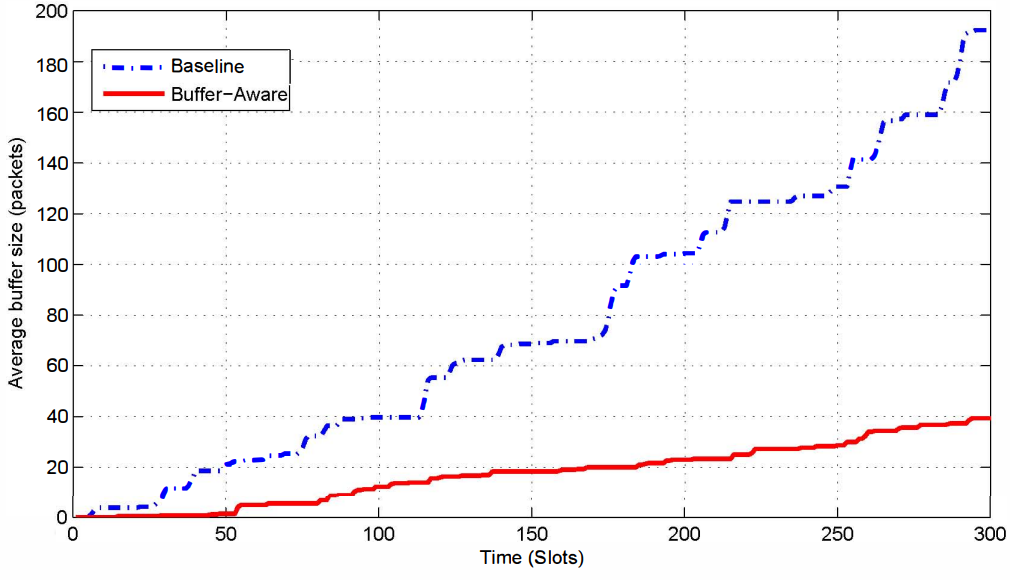
In this paper we study the problem of buffer-aware power control in underlay cognitive radio networks. In particular, we investigate the role of buffer state information, manifested through the secondary users' queue lengths, along with channel state information in the cognitive radio power control problem. Towards this objective, we formulate a constrained optimization problem to find the set of
A soft sensing-based cognitive access scheme exploiting primary feedback
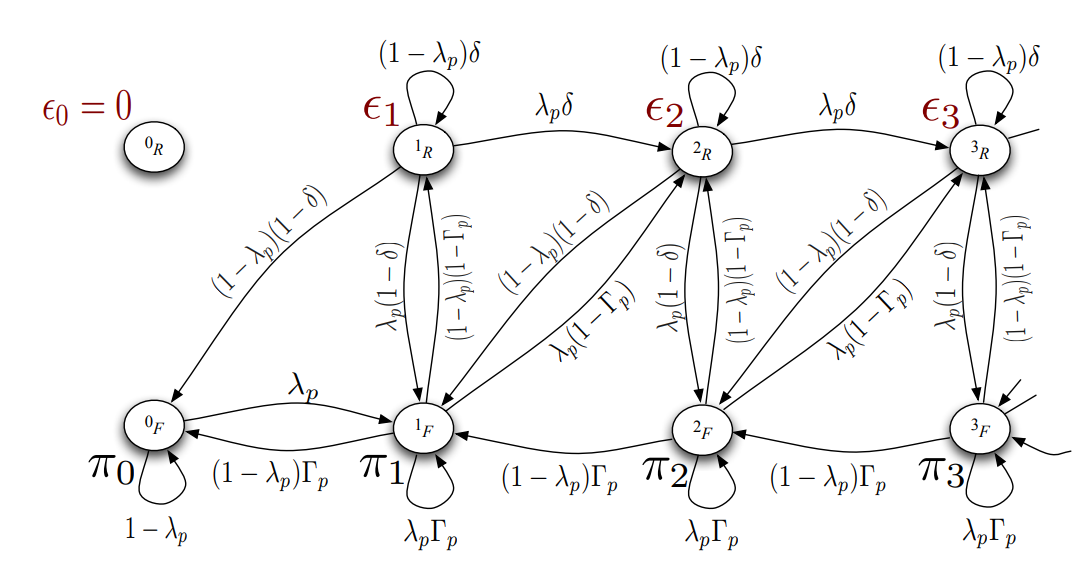
In this paper, we examine a cognitive spectrum access scheme in which secondary users exploit the primary feedback information. We consider an overlay secondary network employing a random access scheme in which secondary users access the channel by certain access probabilities that are function of the spectrum sensing metric. In setting our problem, we assume that secondary users can eavesdrop on
Resource allocation for throughput enhancement in cellular shared relay networks
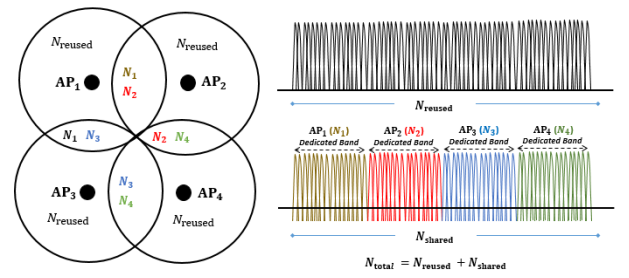
The downlink frame of a cellular relay network is considered, where a shared MIMO decode-and-froward relaying is used to serve the users at the edge of the cell. The relay employs zero-forcing beamforming to manage the interference among the mobile stations (MSs) at the edge of the cell. A non-cooperative scheme is considered where there is no coordination between the base stations (BSs) and the