



Publications
Publications
Filter by
Impact of dynamic capacity policies on WIP level in mix leveling lean environment
Balancing demand's product variety in production planning is one aspect of variety management challenge. This phenomenon is described in lean systems as mix leveling. This paper approach product mix leveling problem from a dynamic perspective. A system dynamics model is developed to explore the dynamics associated with the WIP level performance at different mix leveling policies in a lean
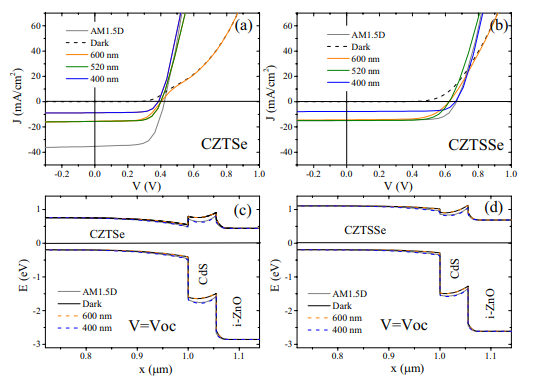
Spectral current-voltage analysis of kesterite solar cells
Current-voltage analysis using different optical band pass filters has been performed on Cu2ZnSnSe4 and Cu2ZnSn(S,Se) 4 thin-film solar cells. When using red or orange light (i.e. wavelengths above 600 nm), a distortion appears in the I-V curve of the Cu 2ZnSnSe4 solar cell, indicating an additional potential barrier to the current flow in the device for these conditions of illumination. This
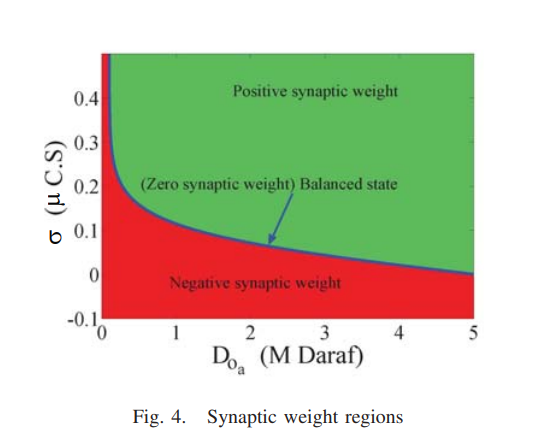
On the mathematical modeling of memcapacitor bridge synapses
Mem-element based synaptic bridge is very promising topic due to its learning capability where the synaptic bridge can be build using either memristors or memcapacitors. In this paper, the detailed mathematical analysis of memcapacitor bridge circuit is introduced. This mathematical analysis is build when a current input signal is applied to excite the bridge. Closed form expressions for the
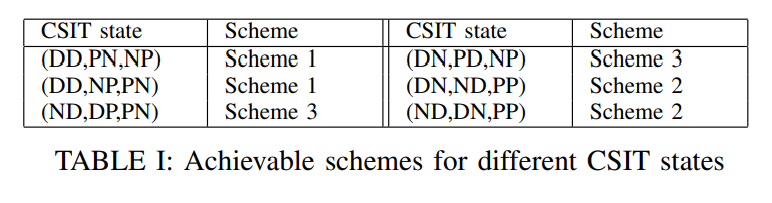
A degrees of freedom-optimal scheme for SISO X channel with synergistic alternating CSIT
In this paper, the degrees of freedom (DoF) of the two-user single input single output (SISO) X channel are investigated. Three cases are considered for the availability of channel state information at the transmitters (CSIT); perfect, delayed, and no-CSIT. A new achievable scheme is proposed to elucidate the potency of interference creation-resurrection (IRC) when the available CSIT alternates
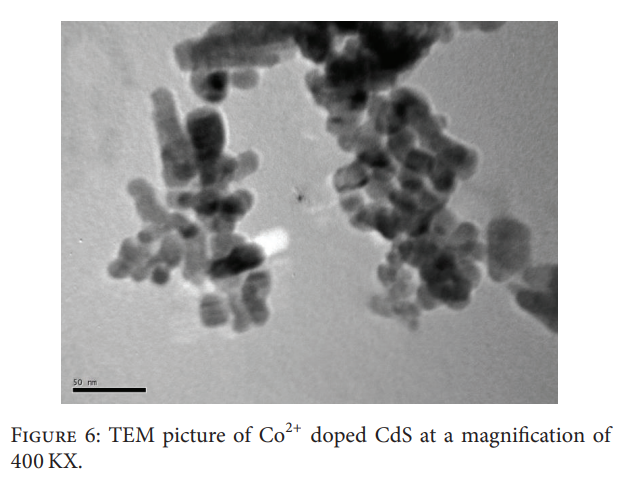
One-step thermolysis synthesis of divalent transition metal ions monodoped and tridoped CdS and ZnS luminescent nanomaterials
Mn2+, Co2+, or Ni2+ monodoped CdS (or ZnS) and Mn2+-Co2+-Ni2+ tridoped CdS (or ZnS) have been successfully synthesized by novel one-step thermolysis method using thiourea as a sulphur source. The synthesized nanomaterials were characterized by X-ray diffraction (XRD), transmission electron microscopy (TEM), and scanning electron microscopy (SEM). It is found that the average diameter and
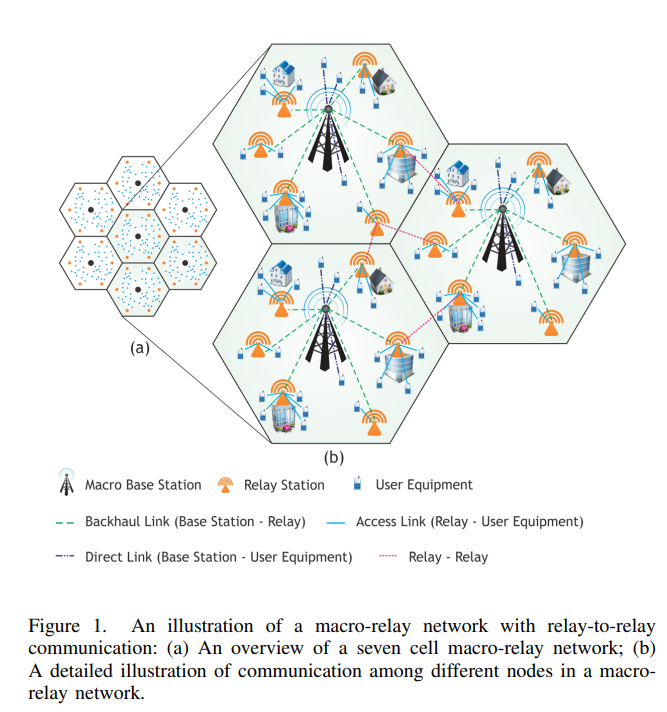
Towards energy efficient relay placement and load balancing in future wireless networks
This paper presents an energy efficient relay deployment algorithm that determines the optimal location and number of relays for future wireless networks, including Long Term Evolution (LTE)-Advanced heterogeneous networks. We formulate an energy minimization problem for macro-relay heterogeneous networks as a Mixed Integer Linear Programming (MILP) problem. The proposed algorithm not only
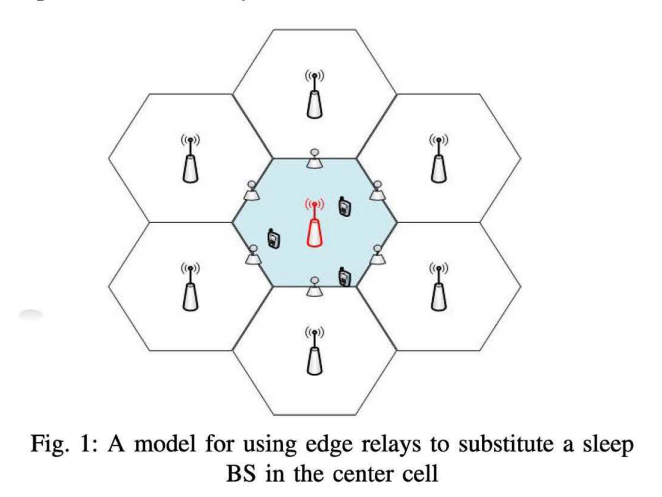
Joint relay assignment and adaptive modulation for energy-efficient cellular networks
Energy efficient operation of cellular systems becomes a core design goal for economic and environment-friendly network operation. Several studies have shown that the energy consumed in base stations represents 60-80% of the energy consumption in cellular networks. In this paper, we develop an optimization framework that exploits several energy efficient techniques including switching power modes
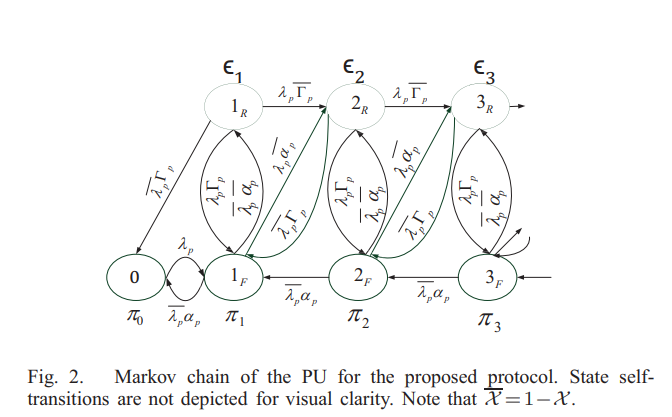
Maximum throughput of a secondary user cooperating with an energy-aware primary user
This paper proposes a cooperation protocol between a secondary user (SU) and a primary user (PU) which dedicates a free frequency subband for the SU if cooperation results in energy saving. Time is slotted and users are equipped with buffers. Under the proposed protocol, the PU releases portion of its bandwidth for secondary transmission. Moreover, it assigns a portion of the time slot duration
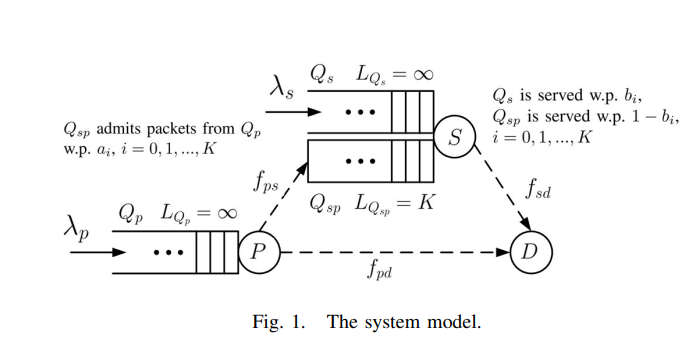
On the stable throughput of cooperative cognitive radio networks with finite relaying buffer
In this paper, we study the problem of cooperative communications in cognitive radio systems where the secondary user has limited relaying room for the overheard primary packets. More specifically, we characterize the stable throughput region of a cognitive radio network with a finite relaying buffer at the secondary user. Towards this objective, we formulate a constrained optimization problem for
Probabilistic band-splitting for a buffered cooperative cognitive terminal
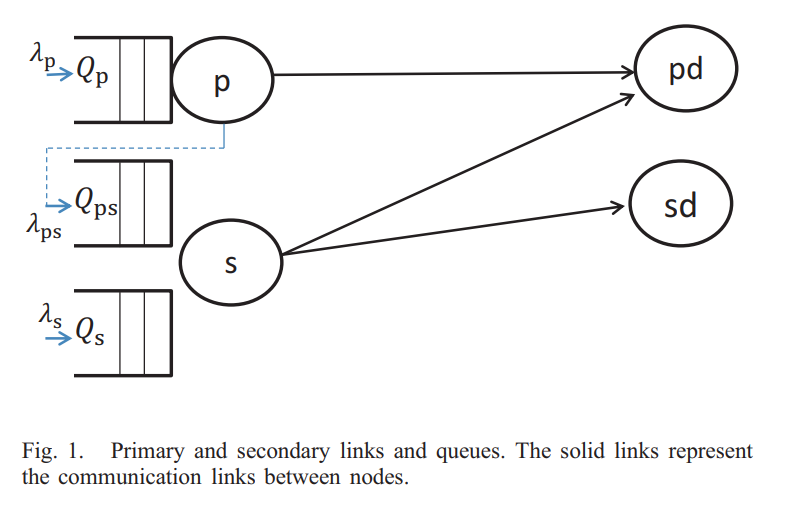
In this paper, we propose a cognitive protocol that involves cooperation between the primary and secondary users. In addition to its own queue, the secondary user (SU) has a queue to store, and then relay, the undelivered primary packets. When the primary queue is nonempty, the SU remains idle and attempts to decode the primary packet. When the primary queue is empty, the SU splits the total