



Publications
Publications
Filter by
Experimental investigation of innovative active packaging biofilms using electrical impedance spectroscopy
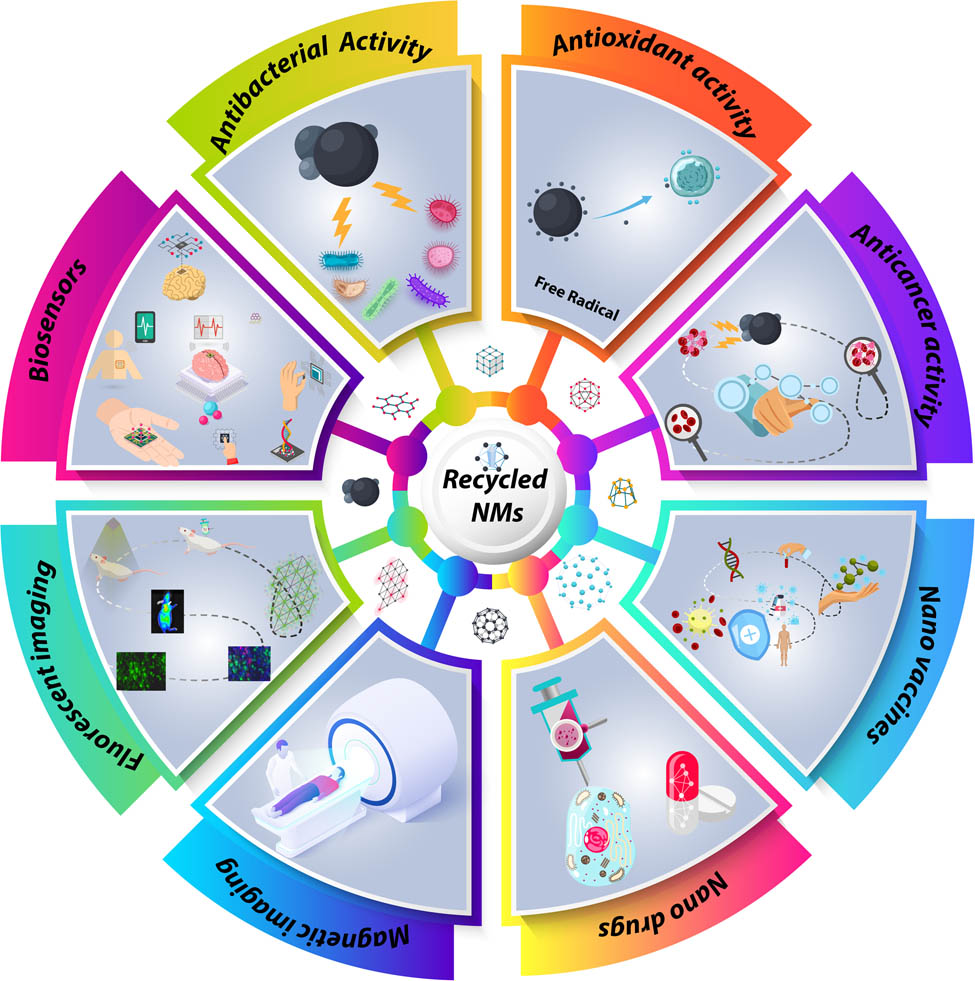
Recent advances in waste-recycled nanomaterials for biomedical applications: Waste-to-wealth
Global overpopulation, industrial expansion, and urbanization have generated massive amounts of wastes. This is considered as a significant worldwide challenge that requires an urgent solution. Additionally, remarkable advances in the field of biomedicine have impacted the entire spectrum of healthcare and medicine. This has paved the way for further refining of the outcomes of biomedical
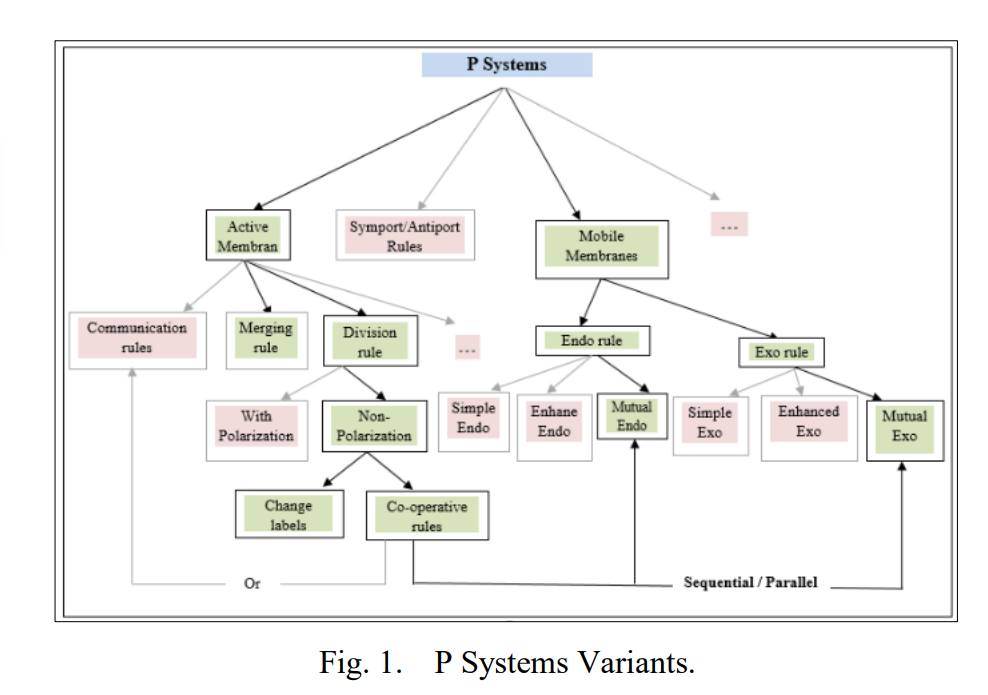
P Systems Implementation: A Model of Computing for Biological Mitochondrial Rules using Object Oriented Programming
Membrane computing is a computational framework that depends on the behavior and structure of living cells. P systems are arising from the biological processes which occur in the living cells’ organelles in a non-deterministic and maximally parallel manner. This paper aims to build a powerful computational model that combines the rules of active and mobile membranes, called Mutual Dynamic
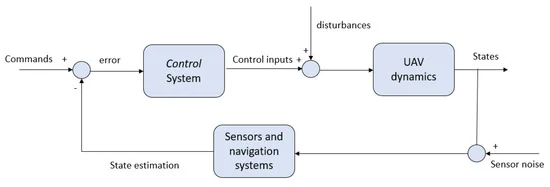
A detailed survey and future directions of unmanned aerial vehicles (Uavs) with potential applications
Recently, unmanned aerial vehicles (UAVs), also known as drones, have gained widespread interest in civilian and military applications, which has led to the development of novel UAVs that can perform various operations. UAVs are aircraft that can fly without the need of a human pilot onboard, meaning they can fly either autonomously or be remotely piloted. They can be equipped with multiple
Application of nano waste particles in concrete for sustainable construction: a comparative study
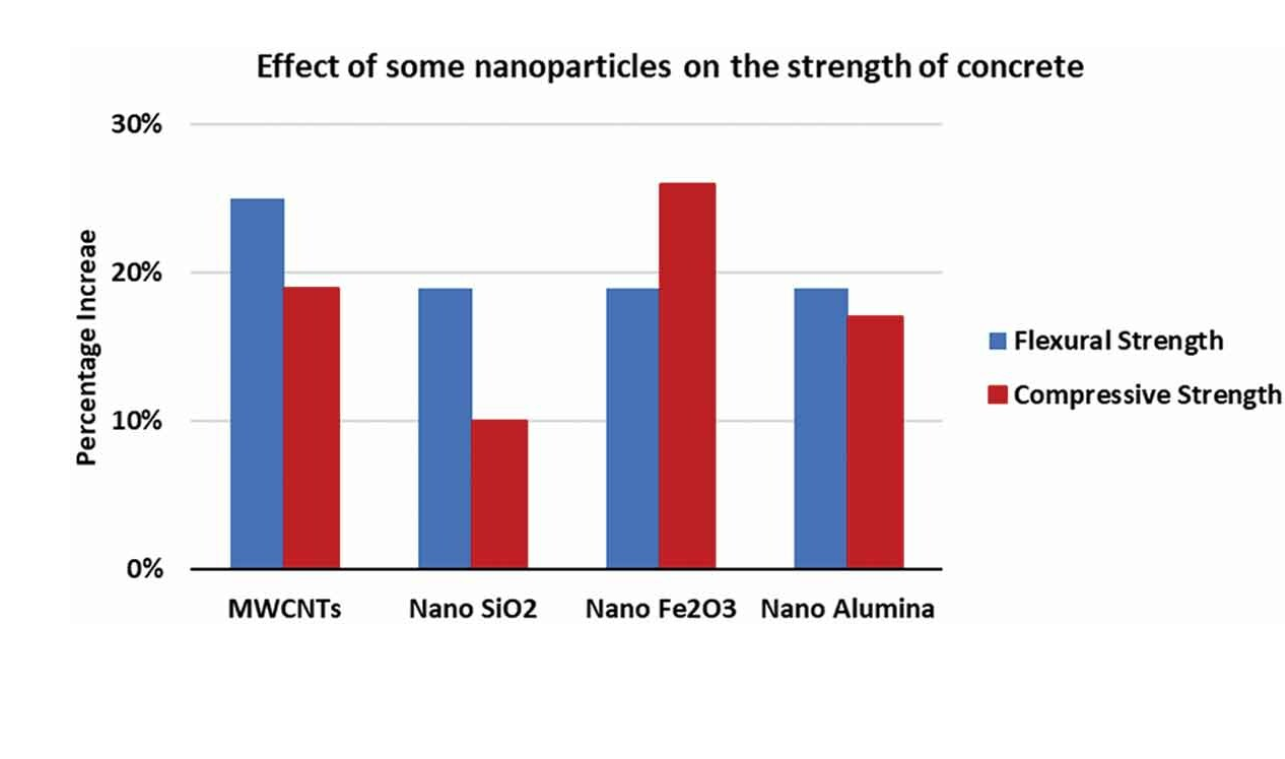
Nano particles contribute as a partial substitute in the production of eco-friendly building materials. This research presents a quantitative assessment of the sustainability effect of partially replacing cement in the green concrete mix with two types of nano-waste particles. The assessment is achieved using two weighing criteria developed by a Sustainable Decision Support System (SDSS) model
Bio-composite Thermal Insulation Materials Based on Banana Leaves Fibers and Polystyrene: Physical and Thermal Performance
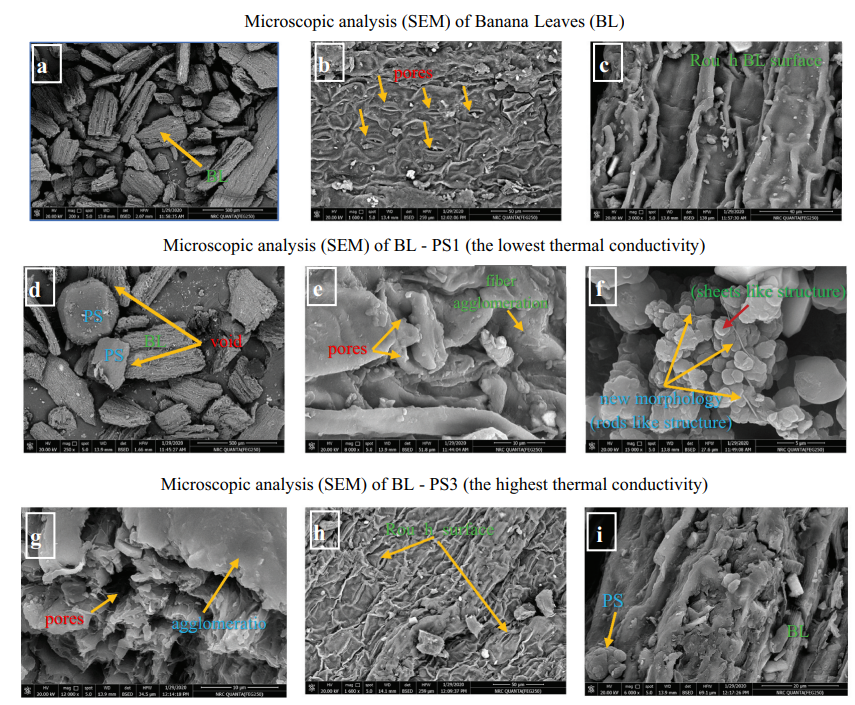
Thermal insulators have a crucial role in reducing the operational building energy. They are commonly fabricated from petrochemical materials that mostly cause negative environmental impacts. This study aims to develop banana leaves-polystyrene composites (BL-PS) as a sustainable and low-cost thermal insulator. The BL powder was mixed with PS in different weight ratios (90:10, 80:20, 70:30, and 60
Modelling Three Dimensional Unsteady Turbulent HVAC Induced Flow
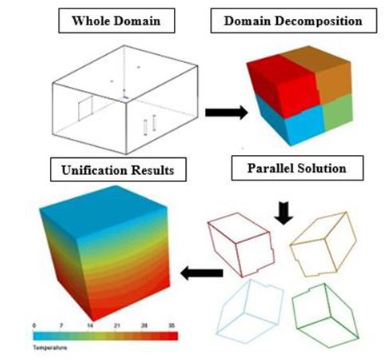
The number of words should not exceed 350. A three-dimensional numerical model for HVAC induced flow is presented. The nonlinear set of buoyancy driven incompressible flow equations, augmented with those of energy and k-ϵ turbulence model is solved. Various relevant are discussed. These challenges include avoiding expensive commercial packages, modelling complex boundaries, and capturing near wall
A Stress Mapping Immersed Boundary Method for Viscous Flows
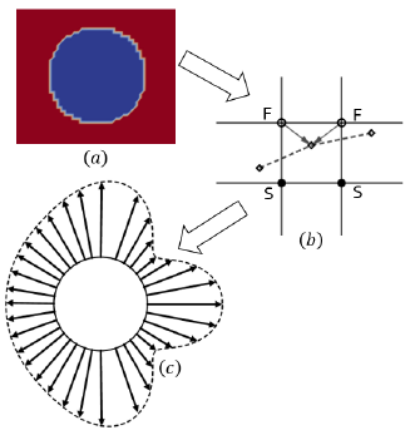
This work introduces an immersed boundary method for two-dimensional simulation of incompressible Navier-Stokes equations. The method uses flow field mapping on the immersed boundary and performs a contour integration to calculate immersed boundary forces. This takes into account the relative location of the immersed boundary inside the background grid elements by using inverse distance weights
Concentric tubes silicon-based metamaterial structure for mid-IR broadband absorption
In this work, we are proposing a silicon (Si) based concentric tube broadband absorber. The proposed broadband absorber is composed of consecutive concentric tubes of intrinsic Si and doped-Si (D-Si) layers. The structure exhibits a broadband performance within a wide range of mid-IR wavelength spectrum extending from 3 to 7 µm with an absorption peak that varies between 0.88 and 0.97 in the case

Power law filters: A new class of fractional-order filters without a fractional-order Laplacian operator
A new category of fractional-order filters, realized without employing a fractional-order Laplacian operator is introduced in this work. This can be achieved through the utilization of an efficient curve fitting method which approximates the frequency-domain behavior of the filter and transposes the fractional-order transfer function into the integer-order domain. Thus, the procedure results in a